Worried you’ll pick up bad habits? Here is how to shoot a longbow: stand side-on, hook the string with your fingers, draw with your back, anchor in the same spot every time, then release smoothly and follow through.
This step-by-step guide sits within the wider topic of archery techniques.
| Item | Value |
|---|---|
| Basic shooting steps | Six |
| Foot position | Shoulder-width apart |
| Bow arm at full draw | Straight, parallel to the ground |
| Bow-hand knuckle angle | 45 degrees to the bow |
| Anchor point | Same point on every shot |
These figures come from the Idaho Bowhunter Safety Course study guide and a USA Archery activity sheet. Guidance can change, so check the sources before you rely on them.
Set your stance and grip
Instructors break a shot into six basic steps: shooting position, nock, draw and anchor, aim, release and follow-through, as the Idaho Bowhunter Safety Course lists them. Learn them in order and add one new habit at a time.
Start with your stance. Stand at a right angle to the target with your feet shoulder-width apart, so the stance feels comfortable and balanced. A Archery New Zealand poster adds that your knees should be relaxed, not locked backwards, with an upright spine.
A fuller guide to foot positions is in the article on archery stance.
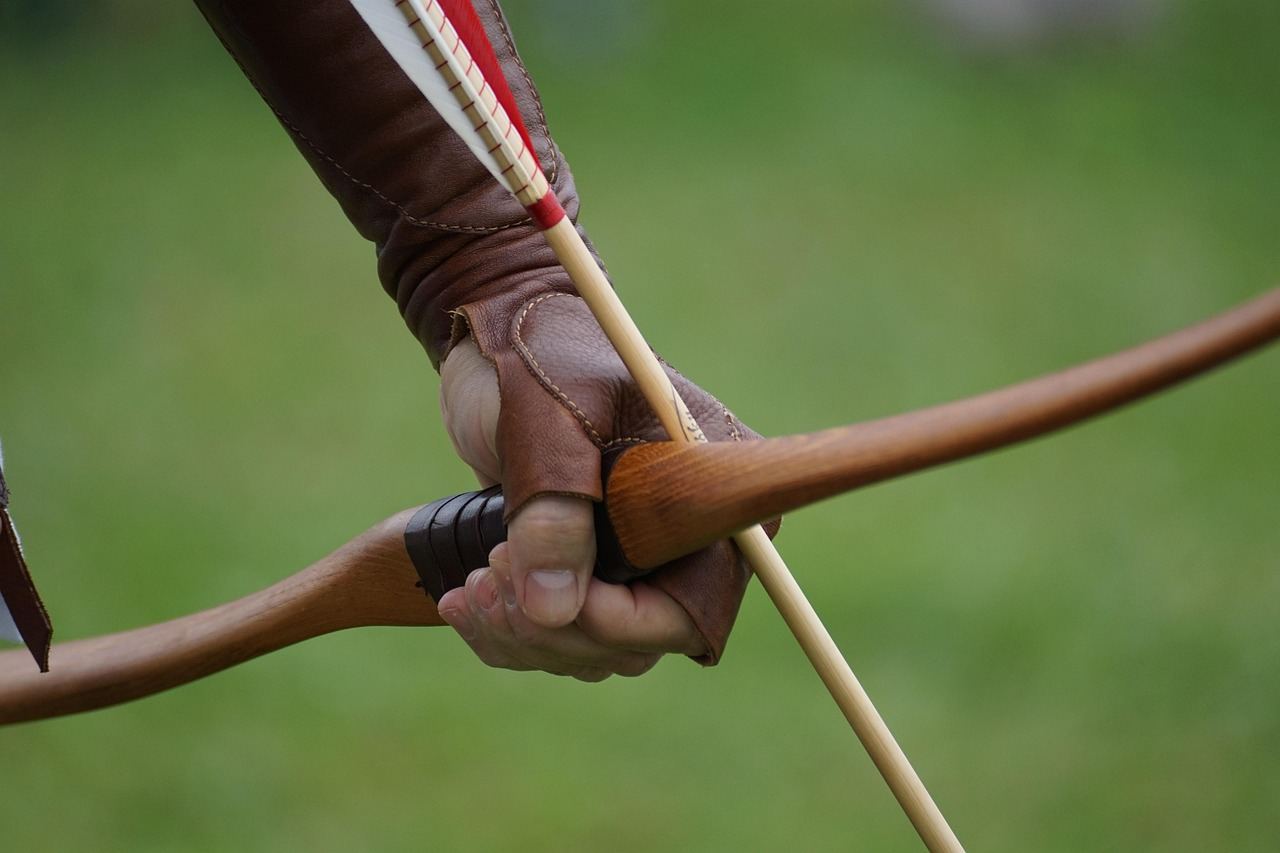
Next, the grip. Longbow handles are shaped differently from modern recurve handles, so expect to adjust your hand a little, according to Wilderness College. Three points keep it simple:
- Hold the handle loosely, and don’t squeeze it.
- Let the top finger and thumb steady the bow while the other fingers stay off it.
- Keep the knuckles at a 45 degree angle to the bow, as the USA Archery checklist describes.
Nock the arrow and hook the string
Nock the arrow while the bow points in a safe direction, toward the target. The nocking point seats the nock in the same place on the string every shot, per the Idaho study guide. Keep the index vane pointing away from the side of the bow.
Rest the arrow on the same side of the bow as the back of your hand, and cant the bow just enough that the arrow stays on the rest. Wilderness College describes that tilt.
Then choose your finger position. A GOHUNT guide to traditional archery names two common options, and it suggests trying both:
- Split-finger: your index finger sits above the nocking point, with the middle and ring fingers below it.
- Three-under: all three fingers (index, middle and ring) sit below the nocking point.
Hold the string with the finger pads and don’t let it sink into the first joint. A deep hook makes the release less smooth and hurts accuracy, says Wilderness College. Sore fingertips are likely, so a glove or tab can protect them.
How do you draw and anchor a longbow?
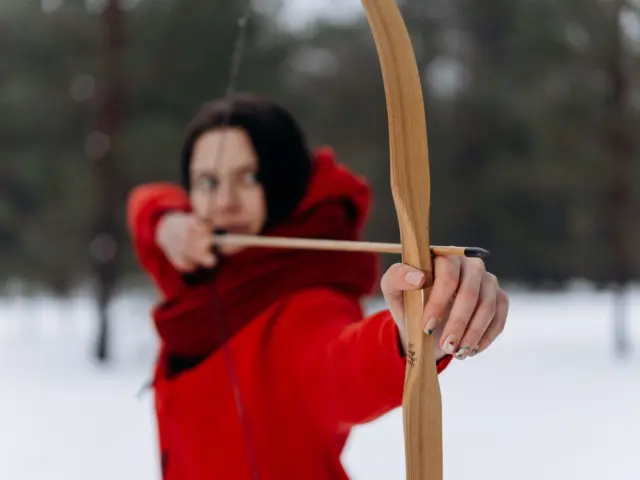
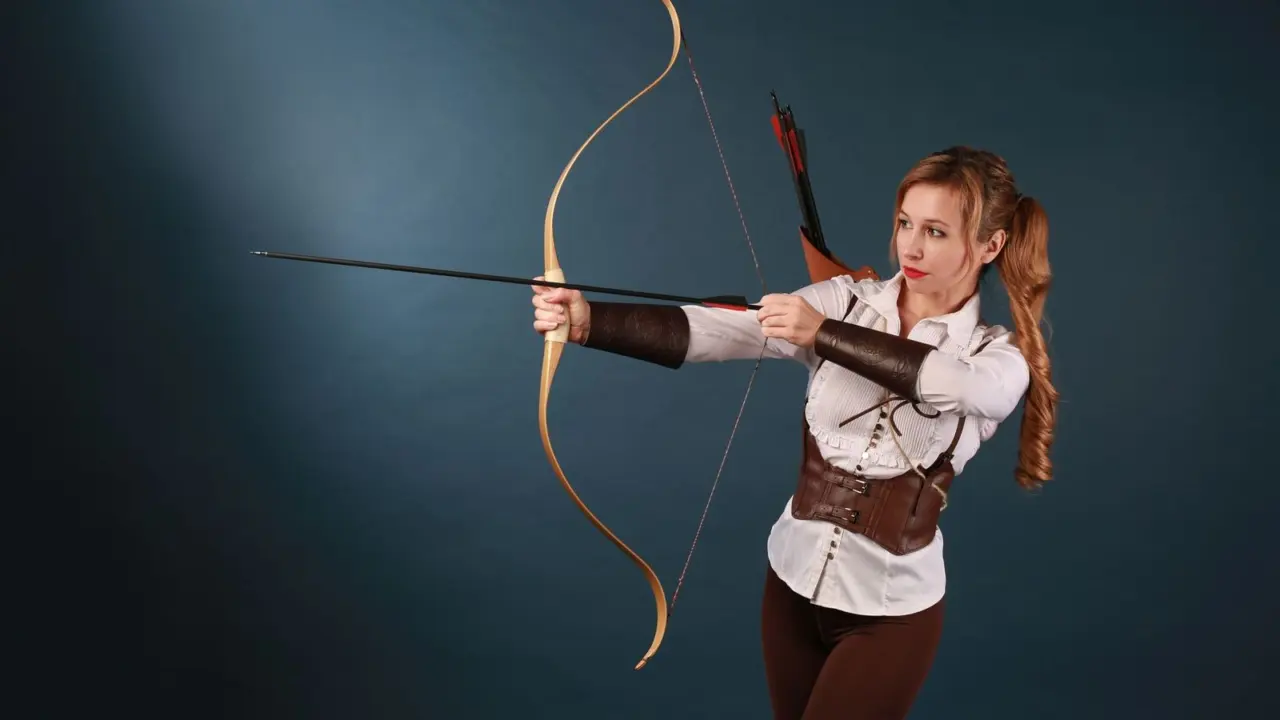
Raise the bow with your arm straight until it is parallel to the ground, while your shooting hand draws the string to the anchor point, as the Idaho study guide explains. Keep the arm straight but not hyper-extended. A bent bow arm can strain the elbow under full draw weight, according to GOHUNT.
Use this sequence for a smooth draw:
- Extend the bow arm toward the target at shoulder level, with the elbow turned down and away from the path of the string.
- Start the pull by drawing your shoulder blades together, rather than yanking with the arm.
- Bring the string hand straight back to your anchor point in one fluid motion.
- Hold briefly and notice how the position feels.
The back muscles matter here. The Human Kinetics archery excerpt says the shoulder blade of the drawing arm should move toward your spine. Drawing with the arm alone will likely make you draw short, per GOHUNT.
Your anchor is where the string hand settles on your face. Sources differ on where: Human Kinetics describes the string touching the tip of your nose with your top finger under the chin, while Wilderness College suggests the middle finger at the corner of the mouth. Pick one and hit the same spot every time.
Practise the draw without shooting. Drawing, holding and letting down helps you avoid developing target panic, GOHUNT notes. Never release a string with no arrow on it, because dry-firing might damage the bow.
Aim, release and follow through
Get the form right before you worry about aiming. GOHUNT advises you not to focus on aiming until you have the form down, so you work on one thing at a time. Longbows usually mean going without a sight, and instinctive archery explains that approach in more depth.
For sight-free shooting, focus matters most. Wilderness College says you must focus intently on the smallest point on the target and hold that focus until the arrow has struck. The Idaho guide offers a simple version: “shoot where you look.”
The release comes from relaxing, not snapping. Let the hand slide off the string while your shoulder blade keeps pulling back, so the release is a surprise each time. Back tension should be maintained throughout the shot, per the Archery New Zealand poster.
Finish with the follow-through. The bow arm may drift naturally, but it should stay extended until the arrow hits the target, according to the same poster. Treat the shot as unfinished until then.
Common mistakes and quick fixes
Most longbow problems trace back to a few repeat habits. Check yourself against this list:
- Bow elbow turning in: make sure the bow hand sits directly behind the handle, then rotate the forearm down and out.
- Drawing with the arm: think of the back muscles first, then move the elbow back.
- Gripping the bow: keep the hand loose so the bow can tilt freely after release.
- Moving the anchor: variation from shot to shot causes erratic groups.
- Anticipating the shot: a habit of releasing “now!” makes you grab the bow and throws the arrow off target.
If you can’t draw the bow with your fingertips, the bow is likely too heavy, and Wilderness College suggests learning with a lighter one. Mimicking the shot without an arrow first also helps you make the motions habitual.
Frequently asked questions
Do you need a sight on a longbow?
Show answer
No. GOHUNT says some people find a sight easier on a traditional bow and that is fine, but it also calls the choice personal. If you use one, a consistent anchor point matters even more.
Which fingers go on the string?
Show answer
Most archers use the first three fingers: index, middle and ring. Wilderness College notes that most put one finger above the arrow and two below. Three-under is the alternative.
Where should you anchor?
Show answer
Choose one spot and use it every time. Common choices are the corner of the mouth or the string touching the nose with the top finger under the chin. Consistency matters more than which one you pick.
Can you shoot a longbow without an arrow?
Show answer
No. Dry-firing can severely damage or break the bow, so release only with an arrow on the string. Mimicking the draw without releasing is a safe way to practise.
Should you learn aiming or form first?
Show answer
Form first. Once your draw, anchor and release are consistent, you can start working on putting the arrow where you want it.