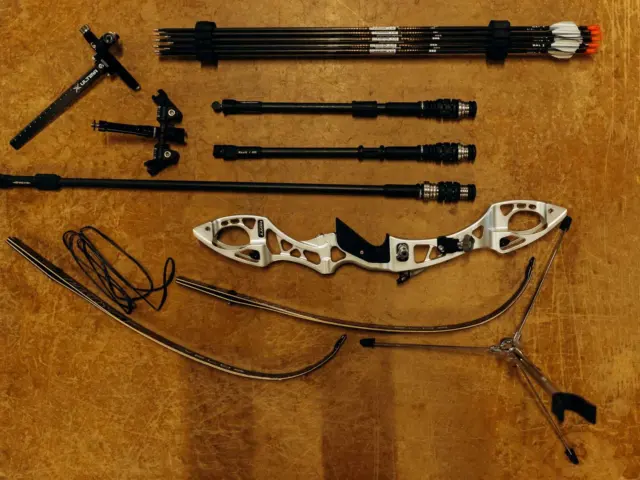
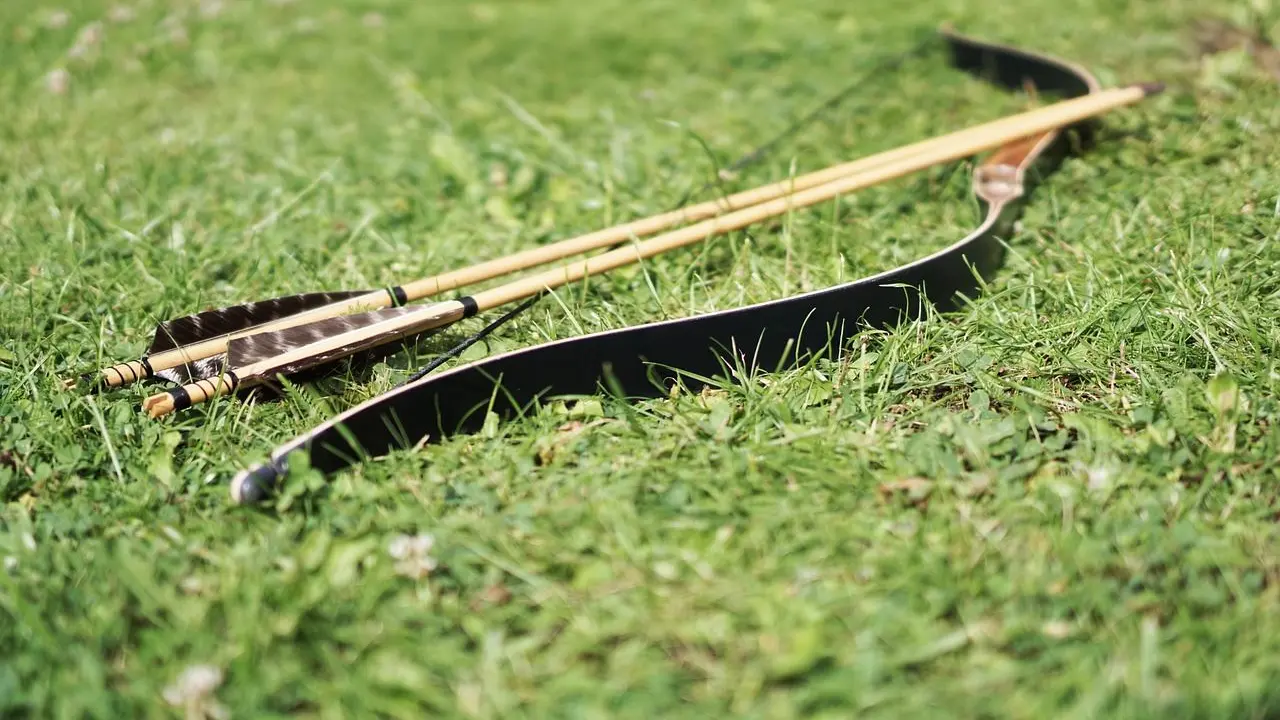
You’re weighing longbow vs recurve, and the short answer is this: a longbow has straight limbs and few add-ons, while a recurve curves its limbs and usually carries more accessories. Your class rules often decide for you.
If you are still building your kit list, our guide to archery equipment covers the wider picture.
| Item | Value |
|---|---|
| Dividing line between longbow and recurve | String lies along part of the limb at brace height |
| USA Archery Traditional Division rules established | 1997 |
| Era the Traditional Recurve division benchmarks against | 1950s and 1960s |
| Euro/Asiatic bow division added | 2016 |
| Indoor Traditional Championship | Discontinued, effective 2023 |
The figures come from Bow International and USA Archery. Rules and divisions can change, so check the source before you rely on them.
What is the real difference between a longbow and a recurve?
The two bows are closer than they look. A 2017 Bow International feature suggests treating longbows, recurves and compounds as a continuum rather than separate machines.
The usual dividing line is limb shape. According to the same feature, most people would say a bow becomes a recurve when the string lies along part of the limb’s length at brace height.
A straight-limbed longbow has a relatively simple force-draw curve, virtually the same as that of a recurve. So the difference you feel at the grip is smaller than the difference you see on the rack, as Bow International explains.
How the equipment compares
The bigger gap shows up in what gets attached to the bow. Wikipedia’s target archery entry lists the typical recurve setup and contrasts it with the longbow.
- Recurve: a sight, a dampener, stabilizers, weights, an arrow rest and a plunger.
- Longbow: typically cannot be taken apart and does not use equipment attached to the bow.
- Arrows: wood arrows are usually used with longbows and barebows, while carbon fiber arrows are used with barebow, compound and recurve.
Aluminum arrows, the same entry says, are usually used by beginners or as a core to carbon arrows at higher levels of competition. That is a useful reminder that the bow is only part of the decision.
Why recurve limbs were added
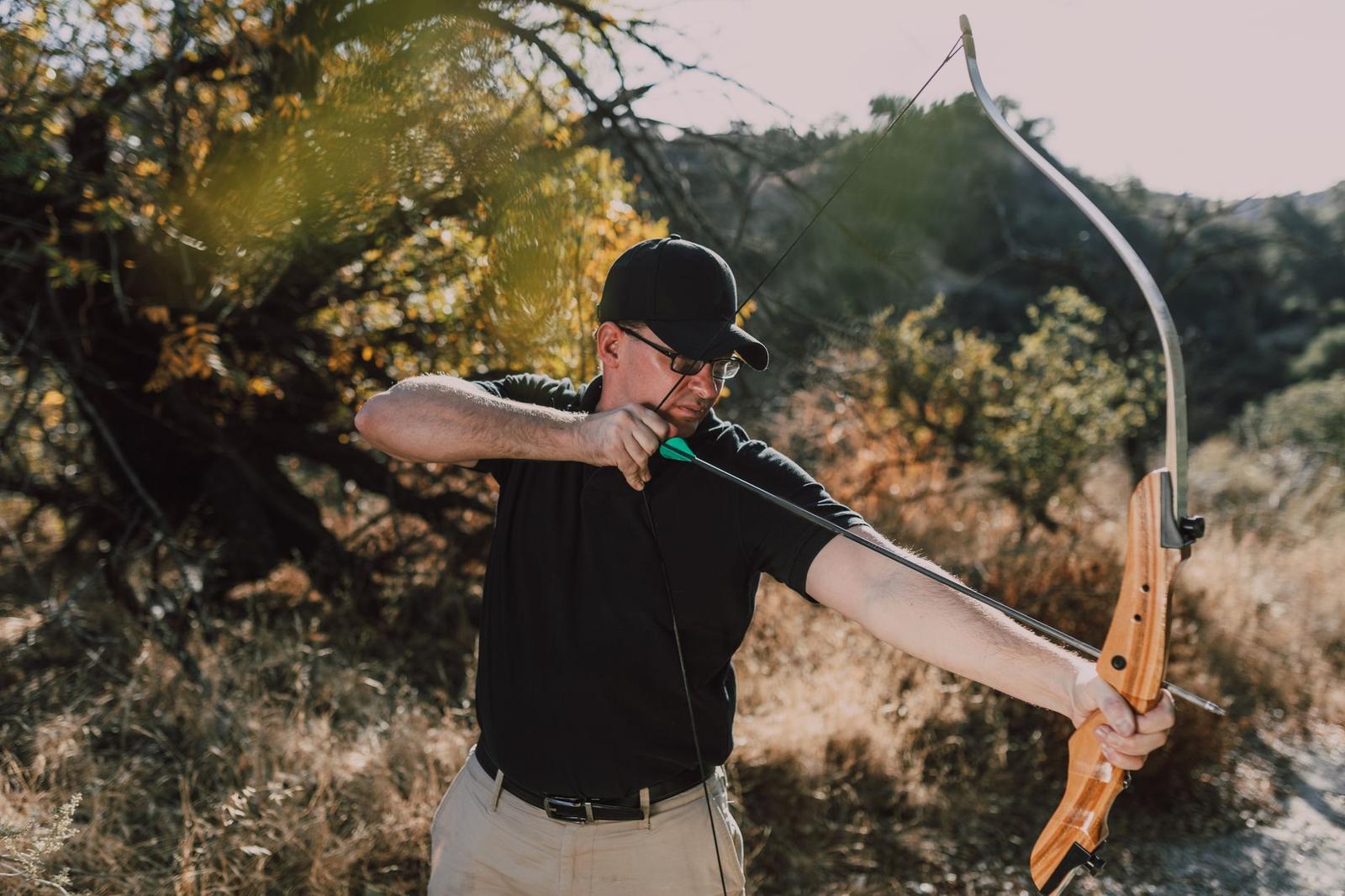
Recurve shaping solved a specific problem. Bow International’s feature says recurves were added to make bows smoother around full draw and to store more energy.
The same feature notes that in the 1930s Hickman showed how an extreme recurve could make the force-draw curve fall as you neared full draw. Sights followed the same logic: archers added them to aim more accurately, and many longbows used to have them, according to Bow International.
The feature adds that there is no inherent reason a longbow should not have a sight or a recurve a peep sight. Governing bodies simply set those lines to separate the categories.
Where the longbow tradition comes from
The longbow carries a lot of history. USA Archery says the British Long Bow Society reveres the yeoman longbow archers of the Hundred Years War, and it calls Agincourt, in 1415, perhaps the most famous of their victories.
That tradition shaped modern target rules. The USA Archery page says the Traditional Division rules were established in 1997 and are based on the British Longbow Society rules.
The same page describes the Traditional Recurve division as a way for wooden recurve shooters to compare scores with target archers of the 1950s and 1960s. So even the traditional side treats the two bows as different divisions with different benchmarks.
How competition rules treat each bow
Your event’s rulebook matters more than any marketing label. USA Archery’s traditional target archery page says the longbow and Asiatic bow divisions allow basic BLBS sight references, and recurve bows may also use a simple attached sight.
It also says these divisions do not necessarily imply instinctive or non-sighted equipment, and archers may choose to shoot barebow if they prefer. Specific equipment rules for the Traditional division can be found in the World Archery rulebook, book 4 item 19.4.
Two other details from that page may affect your plans:
- The Euro/Asiatic bow division was added in 2016.
- The indoor Traditional Championship was discontinued, effective 2023, though archers may continue to shoot their chosen bow styles in their chosen USA Archery division.
Field archery has its own rules. In a January 2021 post, Bogensportinfo reproduced the IFAA barebow style rule that bows, arrows, strings and accessories must be free of any sighting devices, and that stabilizers are permitted.
The labels also differ between organisations. USA Archery’s page stresses that its traditional divisions are not the same as the traditional styles of organizations influenced by hunters and field archery. The committee that looks after them was formed in the mid 1990s to act as stewards of that style of target shooting.
That is why you should read the exact class definition before you buy. As of the January 2021 post, the IFAA rules quoted by Bogensportinfo show how far the same style of bow can move between classes:
- In the barebow style, accessories must be free of sighting devices, but stabilizers are permitted.
- In the freestyle limited style, all types of bows and sights recognized by the IFAA World Congress are permitted, but no mechanical launching aids.
- In the bowhunter style, a straight stabilizer may be no longer than 30.5 cm from the back of the bow, and the draw weight may not be changed during a round, per Bogensportinfo.
Wikipedia’s target archery entry lists the allowed equipment for target archery as recurve, compound, barebow, longbow (American and English) and traditional. So the longbow is a recognised category in its own right, not simply a stripped-down recurve.
USA Archery adds that modern longbows may be more efficient but still provide the challenge of a simple bow using wood arrows. The page says those who choose these divisions enjoy that simplicity and challenge in competitive target rounds.
Which bow should you choose?
Start with the class you want to shoot, not the bow you like the look of. Then match your kit to that class.
- Check the rulebook for your club or event, including the division name.
- Decide whether you want a sight and stabilizers, which fit a recurve setup, or a plainer bow.
- Pick arrows to suit: wood is usually paired with longbows and barebows, carbon with recurves.
The skills carry over. Bow International says good technique for a recurve is usually good technique for a compound or longbow, so you are not locked in by your first choice: see the feature.
If you release with your fingers, our guide to the archery finger tab covers that piece of kit. For the wider comparison including compounds, read about the types of archery bows.
Frequently asked questions
Can a longbow have a sight?
Show answer
It depends on the division. USA Archery says its longbow division allows basic BLBS sight references, and Bow International notes many longbows used to have sights.
Is the technique different for a longbow and a recurve?
Show answer
Less than you might expect. Bow International says good recurve technique is usually good technique for a longbow too.
Which arrows suit each bow?
Show answer
Wood arrows are usually used with longbows and barebows, and carbon fiber arrows with barebow, compound and recurve, according to Wikipedia.
Can a longbow be taken apart like a takedown recurve?
Show answer
Typically not. The Wikipedia entry says longbows typically cannot be taken apart and do not use equipment attached to the bow.