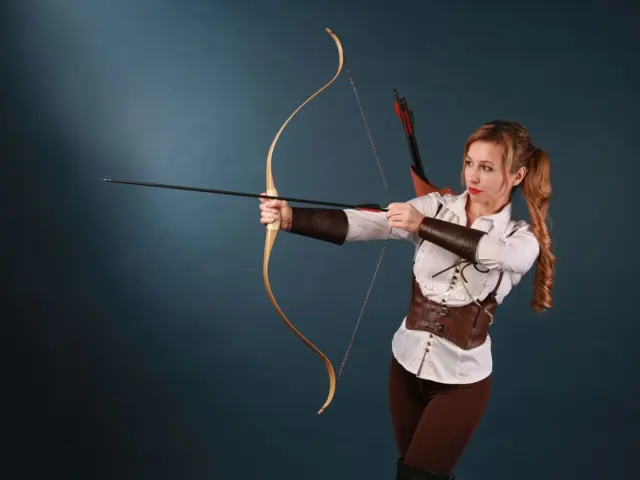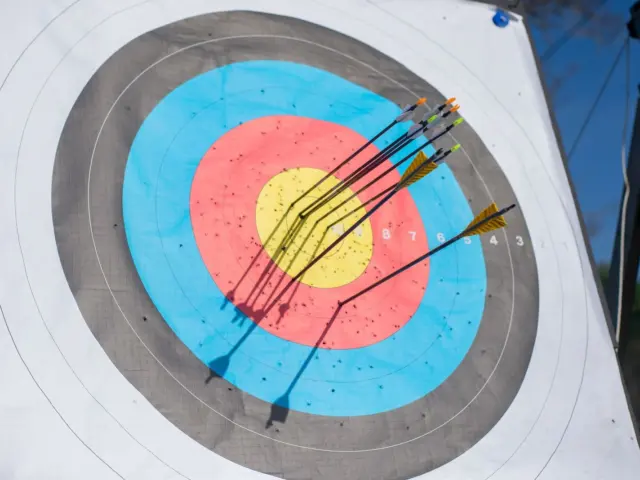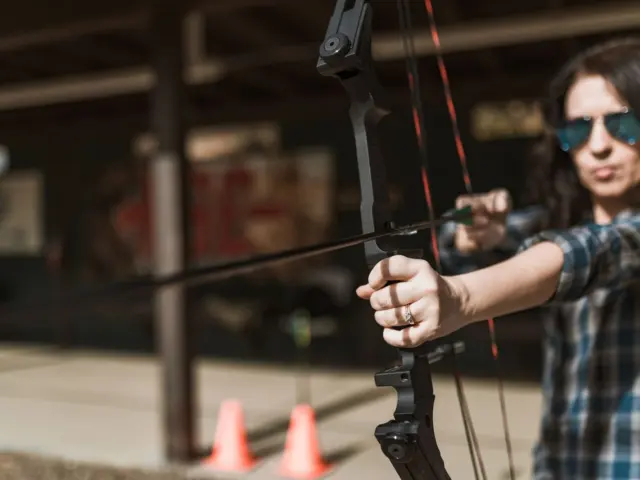
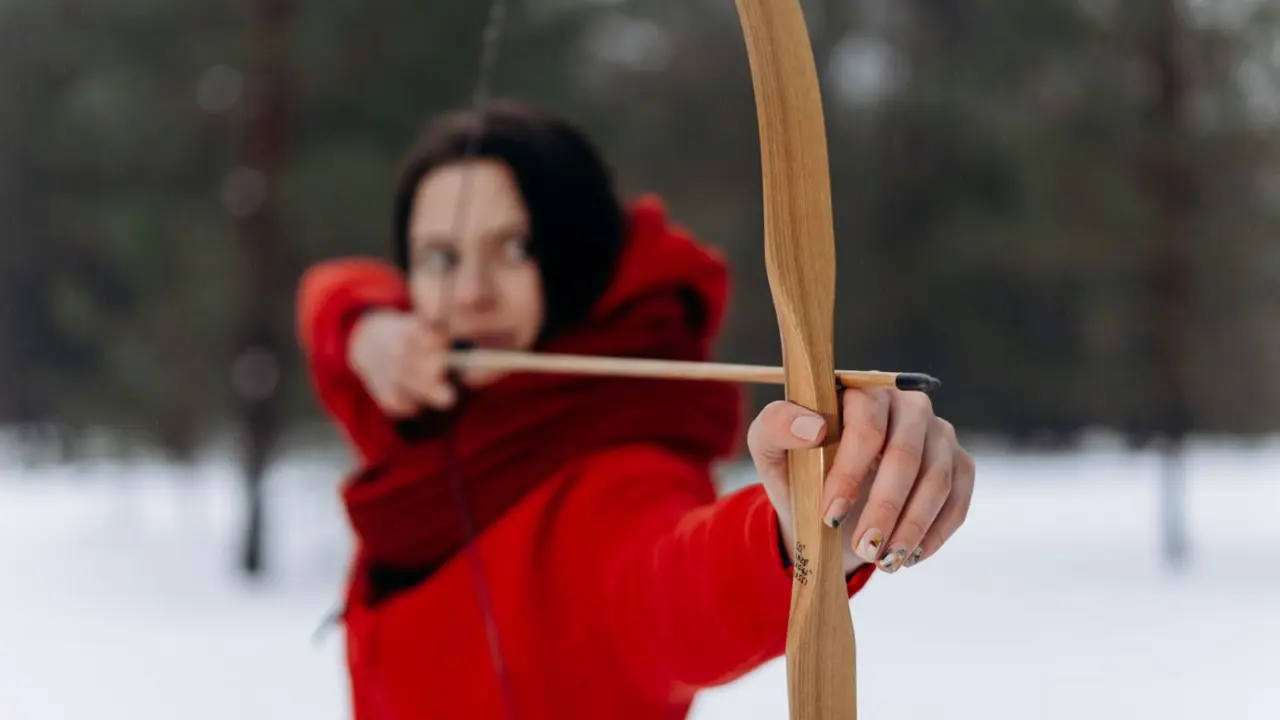
If you’re wondering what instinctive archery is: it’s shooting by looking only at the target, with no sight and no conscious aiming, and trusting trained muscle memory. It works through practice, not magic.
Instinctive shooting sits alongside the other methods in the archery techniques section of this site.
| Item | Value |
|---|---|
| Time for talented archers to reach reliable accuracy | 2 years, and most archers need longer |
| Suggested starting distance for learning | 5-10 m |
| Next distance step once groups are tight | 30 m |
| Long-distance range that needs the most experience | 50-70 m |
| Suggested maximum length of one training session | 30 minutes |
These figures come from one university archery club’s technique guide, Southampton University Student Union Archery. They are one club’s guidance and can change, so check the source before you rely on them.
How instinctive archery works
Instinctive shooting, also called intuitive shooting, is a method where the archer focuses solely on the target and uses no sights or other aiming devices. The idea is that the brain analyses the three-dimensional space between you and the target without you realising it, as described on Wikipedia.
A good comparison is throwing a ball. You don’t calculate a launch angle; you look at where you want the ball to go and your body works out the rest from experience, as the Southampton club’s guide puts it.
In practice, three things carry the shot:
- Your eyes stay fixed on one small, specific point on the target.
- A well-rehearsed shot sequence repeats the same way every time.
- Your trained subconscious handles distance and arc without a conscious reference point.
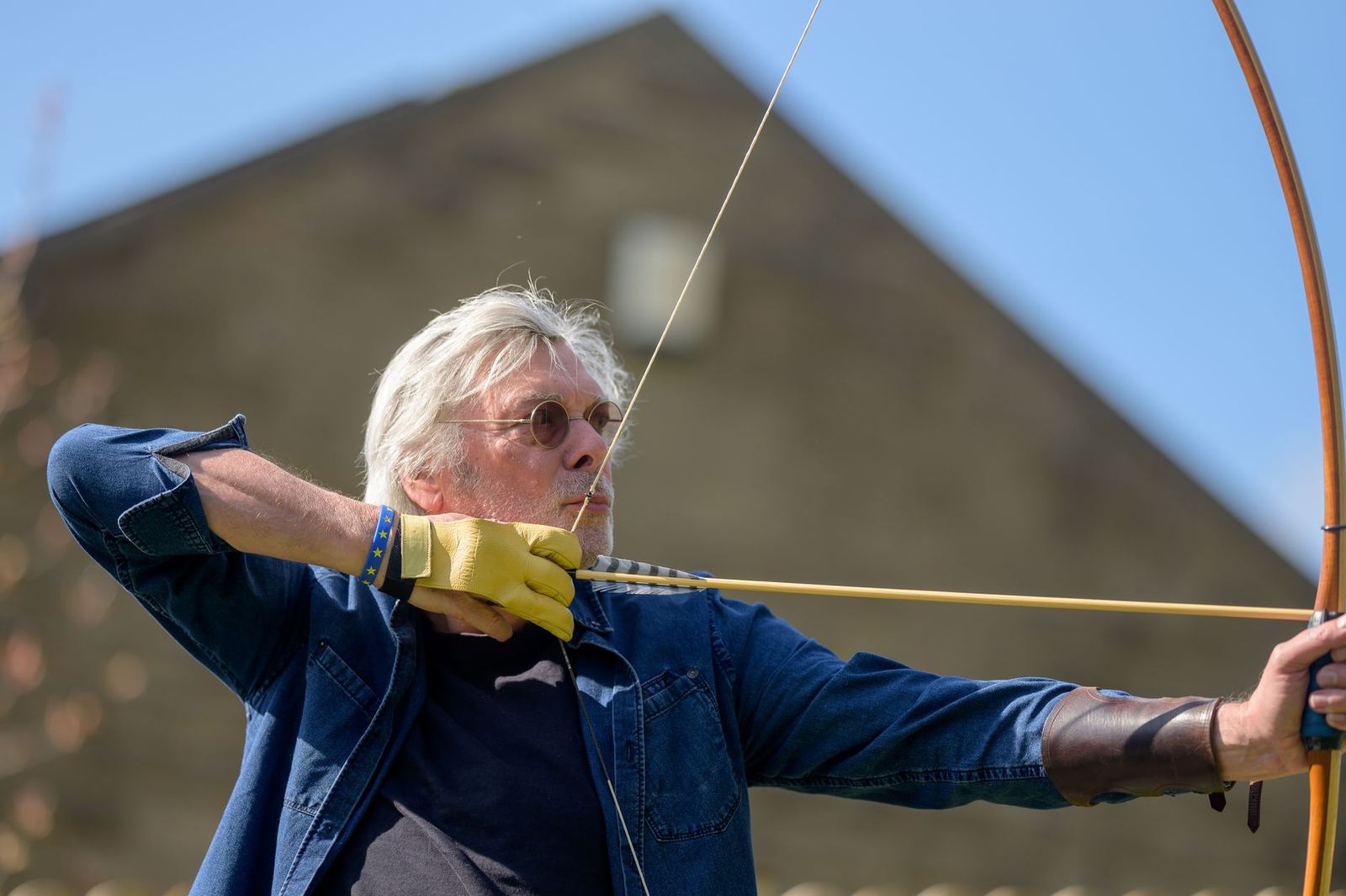
Beginners usually feel they are looking at a wide view with the target in the background. As the movements become automatic, the field of vision narrows until you see only the target, like looking at it through a tunnel, according to Wikipedia’s description.
Is the word “instinctive” accurate?
Not entirely. Instinct is a behaviour set by heredity, but archery skill is acquired through practice, so “intuitive” may be the better word, as Wikipedia points out.
The Archery Historian site makes the same point: instinctive does not mean inherent in the individual. Nobody is born with the skill, and accurate shooting takes considerable practice.
An Outdoor Life writer also calls it a vague term and separates it from instinctive aiming. So when you read advice online, check which meaning the author has in mind.
How to learn instinctive archery
The sources agree on one thing: the skill is built from sound basics and a lot of repetition. This order follows the Southampton guide and the Wikipedia overview.
- Learn the basics first. Grip, foot placement, torso posture, draw, anchor, breathing and release all need to become fluid and consistent before you worry about where the arrow goes, per Wikipedia.
- Start close. Shoot from 5-10 m, where the arrow flies straight out of the bow and does not drop, so you get a feel for where you are pointing it, according to the club guide.
- Keep your eyes on the gold. The guide suggests imagining a laser pointer in your arrow, and says the direction your bow arm points matters more than looking at the arrowhead.
- Move back gradually. Once your groups are tight, the same guide says to go out to 30 m and get used to the drop the arrow experiences there.
- Tackle long range last. At 50-70 m you need especially much experience, and the guide says to let early low shots happen until your subconscious adapts.
- Keep sessions short. The club advises never training for more than 30 minutes, and changing distances often.
A hunting-focused lesson from Piedmont Hunter gives a similar start: a blank bale at 5 to 10 yards, hundreds of arrows, and no sloppy repetitions, because bad form trains the wrong subconscious pattern.
If your groups stay loose at close range, work through the advice on how to improve archery accuracy before you add distance.
Instinctive archery vs gap shooting and similar methods
Several aiming methods get confused with instinctive shooting. The main difference is how consciously you use the arrow or bow as a reference.
- Gap shooting: you mentally calculate the distance and use the arrowhead to direct the trajectory, so the shot is more thoughtful and less instinctive, per Wikipedia.
- Point of aim: you place the arrowhead on a reference point on the ground, a method often used in repeated shooting such as indoors.
- Split vision: you keep your gaze on the target while seeing the arrowhead out of focus in peripheral vision. Howard Hill used it, and it is sometimes mistaken for instinctive shooting.
Archery Historian argues that using the arrowhead as a sight reference is still using a sight, so consciously lining it up is not instinctive archery.
Piedmont Hunter takes a gentler view: the two are not opposites but points on a spectrum, differing in how consciously you use the arrow tip.
Strengths and limits of instinctive shooting
The method suits several situations. Archery Historian notes it is ideal for mounted archery, since gap shooting becomes extremely difficult from the back of a galloping horse.
The Southampton guide adds that for field archery at unknown distances, or just for fun, it can be as good as sighting. It also warns that sights and reference systems give a great advantage in target archery, so it would be foolish not to use them when you are interested in competitions.
The method has drawbacks too:
- It takes much more time and effort to learn than referenced shooting.
- It is tempting to slip into gap shooting, which is much quicker to learn.
- One Outdoor Life writer says it is not a formula for consistent accuracy and led him to frustration, unpredictable snap-shooting and target panic.
Whether the trade-off is worth it depends on your goals. For quick scores at known distances, a referenced method is faster to learn, while the instinctive route rewards patient archers who enjoy shooting by feel and by feedback from every arrow.
Instinctive shooting is used in competitions in the longbow, historical bow and traditional bow categories, according to Wikipedia. If you choose that route, read up on how to shoot a longbow to build the form it depends on.
Frequently asked questions
Is instinctive archery just shooting without aiming?
Show answer
Not quite. You don’t use sights or consciously line up the arrow, but the skill rests on trained form and a lot of repetition. The Southampton guide compares it to throwing a ball at a target you are looking at.
How long does it take to learn?
Show answer
The Southampton club’s guide says talented archers need 2 years, and most need even more, to reach a level where they know they will hit what they are looking at. Read the source for its full context.
Where should a beginner start?
Show answer
Start close, at 5-10 m, with good form and your eyes on a small spot. The club guide recommends this range because the arrow flies straight and does not drop.
Is instinctive archery the same as gap shooting?
Show answer
No. Gap shooting uses the arrowhead as a reference to direct the trajectory, which makes it more deliberate. Instinctive shooting relies on the target as the main visual cue, as Wikipedia describes.