Arrows landing all over the target? Here is how to improve archery accuracy: build a repeatable stance, grip, anchor and follow-through, and change one thing at a time. You tighten groups by repeating a simple shot.
This guide belongs to our wider coverage of archery techniques.
| Item | Value |
|---|---|
| Time to establish a new shooting habit | About 30 days |
| Toe angle in a square stance | 90 degrees to the target |
| Bow arm to upper body at full draw | 90-degree angle |
| Time to reach hunting form with practice (one bowhunter’s account) | About two months |
These figures come from Bowhunter and Realtree. They are one shooter’s guidance rather than fixed standards and they can change, so check the sources before you rely on them.
Build a stance and posture you can repeat
Your stance is the base of every shot. Bowhunter’s form guide suggests you place your toes 90 degrees to the target with your feet shoulder width apart, and keep your knees relaxed rather than locked. It calls this a square stance.
Some archers prefer a slightly open stance. Bowhunter says it gives more bowstring clearance along the chest and bow arm, while a square or closed stance may make it easier to line up your shoulders and hips with the target. A GoHunt writer also favours a slightly open stance with feet about shoulder width or just inside, because it is sturdy, comfortable and repeatable.
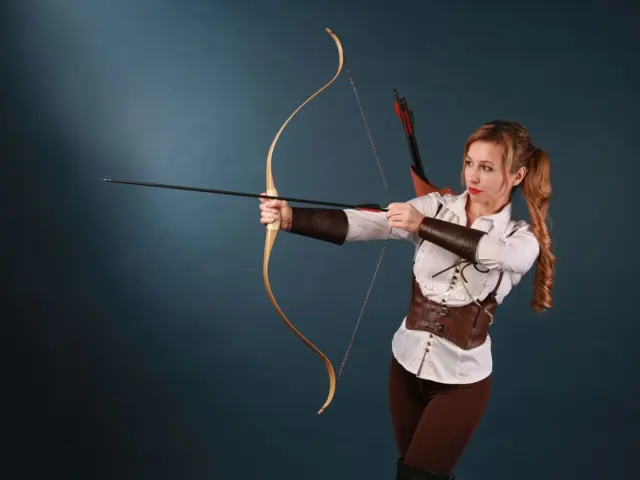
Next, look for the T-form at full draw. Picture a straight horizontal line from the top of the bow hand, across your shoulders, to the elbow, with torso, neck and head upright and not leaning forward or back. If you lean, Bowhunter suggests adjusting draw length, because most archers use a draw length that is too long.
Give new habits time. Bowhunter says it takes about 30 days to establish a new habit, so go slowly and do each change properly. A phone on a tripod, filming you from the side, shows posture faults far better than feel alone.
Fix your grip and bow arm
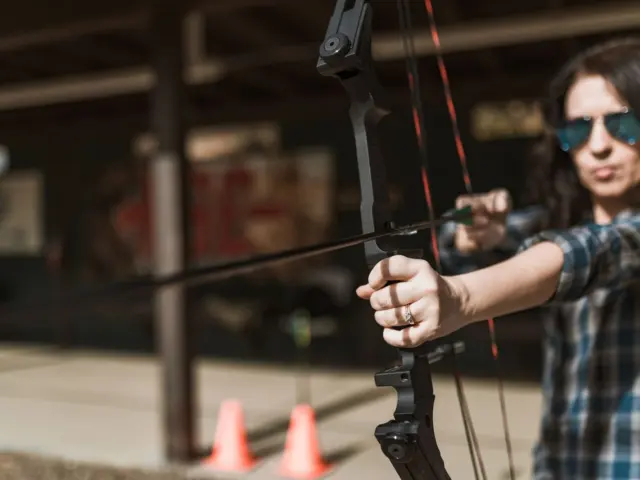
A tense grip twists the bow. GoHunt’s advice is that your grip hand should be dead, with no tension. Outdoor Life adds that the thinner the grip, the less torque you can put on the bow, and that you should keep the grip very open.
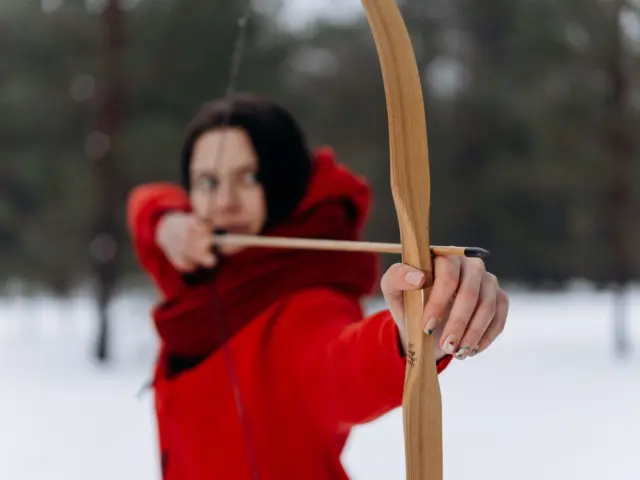
Realtree’s Bill Winke describes a simple way to stop wrist hinge: press the part of your palm that lines up with your forearm bones against the back of the handle. His rule is to never readjust the grip once you start the draw cycle.
- Press the same spot of your palm into the handle every shot.
- Keep your fingers relaxed, with the index and middle fingertips resting lightly on the front of the riser, as GoHunt suggests.
- Do not tighten up as the shot fires.
The bow arm is where advice differs. Winke recommends a very slight bend, acting like a shock absorber, with a 90-degree angle between your upper body and bow arm at full draw. GoHunt says the answer to locked or bent is neither, and wants a straight, relaxed, bone-on-bone alignment, so try both and keep the one that stays steadiest for you.
Whichever you choose, steer your aim with big muscles. Winke advises using the legs and torso to control the bow’s position rather than the small muscles of the shoulders, arms and hands.
Anchor the same way every shot
A repeatable anchor point is a set of reference points, not a single touch. GoHunt describes three:
- the string to the tip of your nose
- the string to the corner of your mouth
- your release hand to your face
Bring the string to your face rather than moving your head to the string, and keep your eyes on the target. If you struggle, Bowhunter suggests shooting a few days without a peep installed so your face finds its most comfortable position. You then fit the peep to match.
Pick a spot you can feel precisely. Winke presses his index knuckle into the pocket between jawbone and earlobe, and says his anchor is not necessarily better than others, just easy to hit every time. Outdoor Life notes that a consistent anchor can only be achieved through the process of shooting, so expect to refine it over many sessions.
Release, breathing and follow-through
A surprise release keeps you from punching the shot. Winke says he is far more consistent using back tension than trying to time the shot and pull a trigger. Pro archer Eric Griggs, quoted by Outdoor Life, says the best archers let the pin float on the target and begin to squeeze rather than holding it dead-steady.
Keep breathing. Outdoor Life warns that holding your breath reduces oxygen flow and makes you shake, and that your visual acuity starts to decrease after holding your breath for only 8 seconds.
Then comes the follow-through. Winke says that if the bow is still aiming at the target until the arrow hits it, you will be consistent. Improve Your Archery gives the same advice: stay in shooting position until the arrow hits, because lowering the bow too early makes the arrow fly low.
Check your bow hand too. The same source warns that a firm grip makes it easy to twist or jerk the bow on release, so a relaxed hand protects your follow-through.
Check draw length and draw weight
A wrong draw length works against every other fix. GoHunt gives a quick estimate you can combine with a second check:
- Stand straight with your back to a wall and your palms out.
- Have someone measure from middle fingertip to middle fingertip.
- Divide that number by 2.5 for an approximate draw length.
The same writer says to compare this with a fist-against-a-wall method that mimics full draw. Then watch your pin: wide, slow sweeping arcs suggest the draw length may be too long, while a tight but rapid, jumpy pin suggests it may be too short.
At full draw, Bowhunter says the draw-arm elbow should sit directly behind the arrow, and an elbow off to the side can mean the draw length is wrong. GoHunt also notes that if you are over-bowed, it takes longer to get into your shooting process. Choose a draw weight you can pull smoothly without pointing the bow at the sky to get it back.
Most of these sources write for compound bowhunters, so recurve shooters should treat the advice as a starting point to test, not a rulebook.
How to improve archery accuracy by reading your groups
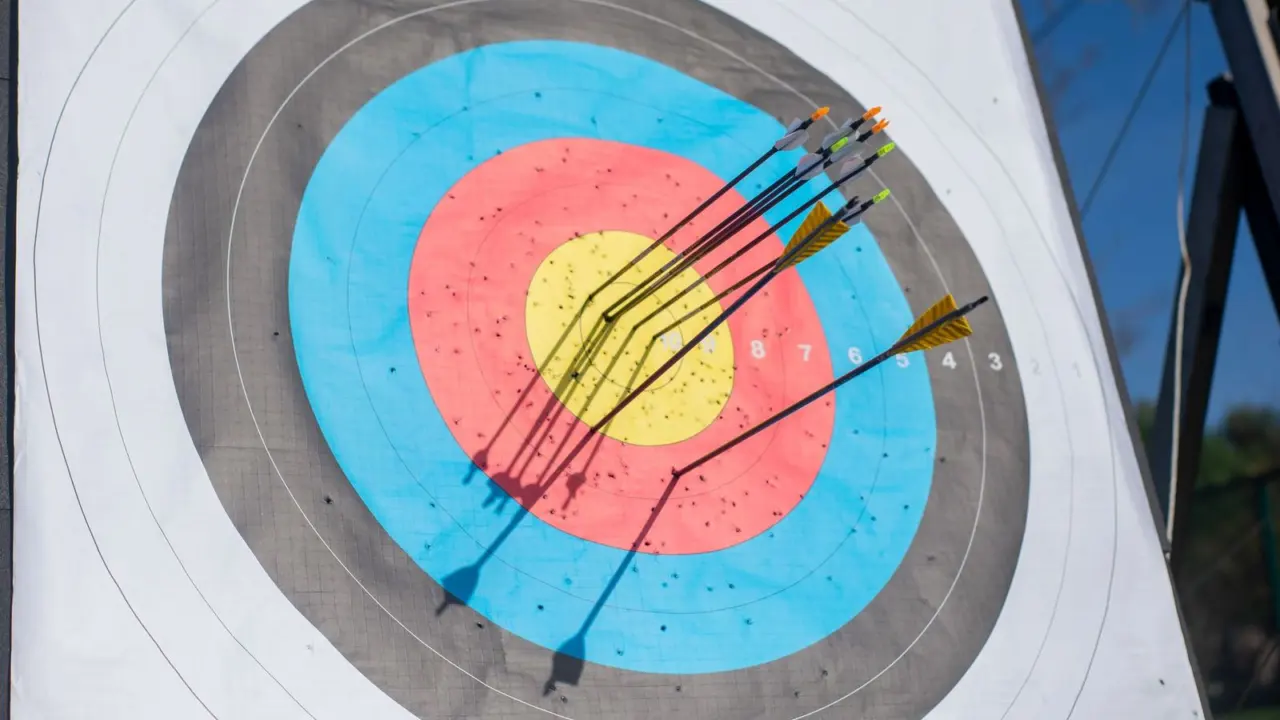
Your arrow pattern is a clue. A club guide from Centenary Archers says the pattern of your groups may give you a clue to what may be happening, and tells you to check the equipment first for loose parts or screws. Its lists are written for right-handed archers, and left-handed archers reverse left and right.
- High groups: an arrow nocking point that is too low is one listed equipment cause.
- Low groups: a nocking point that is too high is one listed cause, and so is a grip tighter than usual.
- Scattered groups: look for bent arrows or a loose sight and sight pin.
The same guide lists shooting faster than usual among the form causes of high shots. Once equipment is ruled out, go back to the form checks above and fix one at a time.
Practise under mild stress too. Outdoor Life suggests shooting from a kneeling position and keeping at it until you can shoot a softball-size 5-arrow group even with tired legs. If you want to compare aiming styles, our pages on gap shooting archery and instinctive archery are the next stop.
Frequently asked questions
How long does it take to improve archery accuracy?
Show answer
It depends on how often you practise. Bowhunter says a new habit takes about 30 days to form, and Winke says that with enough practice at challenging distances he can reach good hunting form within about two months.
Should I lock my bow arm?
Show answer
Sources differ. GoHunt says neither locked nor bent, while Winke suggests a very slight bend. Test both and keep the one that holds steadier.
Should I hold my breath when I aim?
Show answer
No. Outdoor Life says holding your breath can make you shake and that vision starts to fade after only 8 seconds.
Do I need to hold the pin perfectly still?
Show answer
Not according to Eric Griggs, quoted by Outdoor Life: the best archers don’t hold their pin dead-steady. They let it float on the target and begin to squeeze.