Wondering what archery clubs are really like before you walk in? Most lend you the gear for your first session, teach safety before you shoot, and welcome complete beginners. Here is what to expect.
| Item | Value |
|---|---|
| Beginners course length (Archers of Raunds) | 6 weeks |
| Visiting shooter fee (Archers of Raunds) | £8 per session |
| Over-21 annual membership (Bowmen of Danesfield, 2025 page) | £225 per year |
| Under-21 annual membership (Bowmen of Danesfield, 2025 page) | £118 per year |
| Induction course length (Bowmen of Danesfield) | Usually five consecutive Wednesdays |
| Youngest juniors welcomed (Bowmen of Danesfield) | From eight years old |
These figures come from the Archers of Raunds first-lesson page and the Bowmen of Danesfield 2025 membership page, two clubs named here only as neutral examples. Fees, course lengths and rules can change, so check the source before you rely on them.
What archery clubs offer and who they are for
Archery clubs are local groups that give you a place to shoot, shared equipment and experienced people to learn from. Think of a club as a learning community rather than a shop or a gym. Most are happy to see people who have never held a bow.
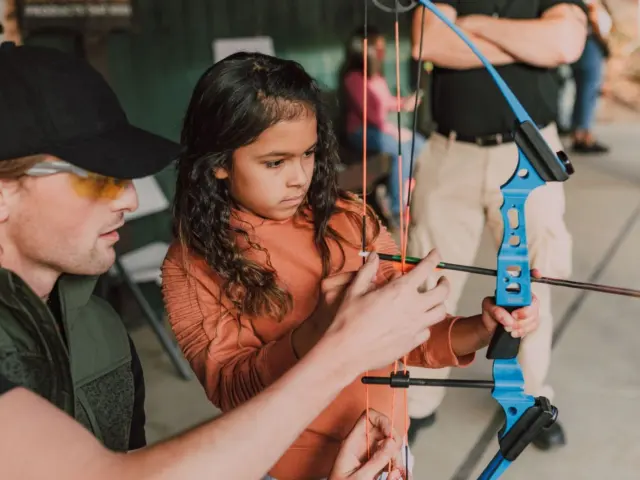
Beginner-friendly sessions are common. Archery Australia describes Come and Try sessions as designed for people who want to give archery a go without needing their own equipment, led by accredited coaches who teach the basics of safety, technique, equipment and etiquette. You are also introduced to the community within that club, as the Archery Australia beginner FAQs explain.
Clubs differ a lot in how they are set up. Three examples show the range:
- A village-style club in England. Archers of Raunds runs separate beginner lessons and keeps the first-lesson rules clearly written down.
- A year-round membership club. The Bowmen of Danesfield advertise indoor and outdoor ranges available throughout the year.
- A campus club. The University of Waterloo Archery Club charges a fee per term and reserves a training day for new members.
If you want a gentle overview of starting from zero, the guide to archery for beginners is a good companion to this page. It covers the ideas you will meet again at your first club session.
This site is an independent educational guide. It does not run, endorse or take bookings for any club, so you will need to contact a club yourself to find out what it offers.
What happens at your first session
A first session is mostly about safety and getting comfortable, not about hitting the gold. Clubs know that walking into a new sport can feel awkward, and good ones plan the day to ease that. The details differ, but the shape of the day is usually similar.
- Arrive, find a member and make yourself known.
- Wait behind the waiting line until you are called forward.
- Hear the safety rules and the club’s etiquette from your coach.
- Learn the main parts of the bow and the different kinds of bow.
- Shoot at a close target with club equipment.
- Help put the equipment away at the end.
Archers of Raunds says it wants to allay the fears of newcomers through good communication before the first lesson. In its outdoor season the first lesson is held on a Saturday or Sunday from 11-3pm, and in its indoor season on a Friday evening from 7-10pm, according to the club’s first-lesson page. Beginners are expected to help store the equipment after the shoot, under supervision.
Theory comes first at that club. A large part of the first two sessions is taken up by theory, though the club aims to get you shooting on the first day, and later lessons are largely devoted to shooting and technique development, as the same page describes. The reasoning is simple: the theory keeps you safe and keeps the archers beside you safe.
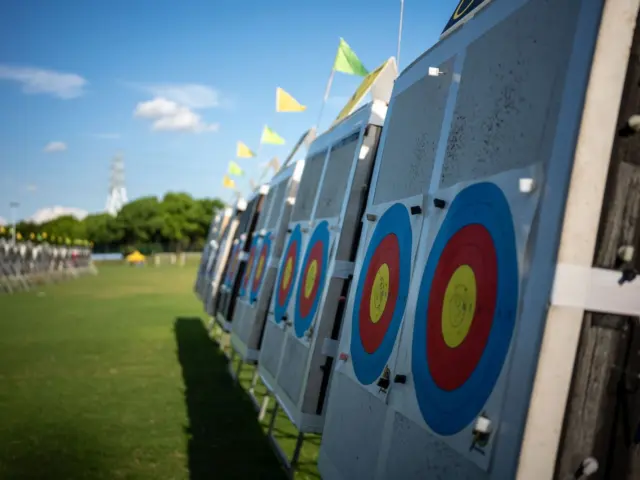
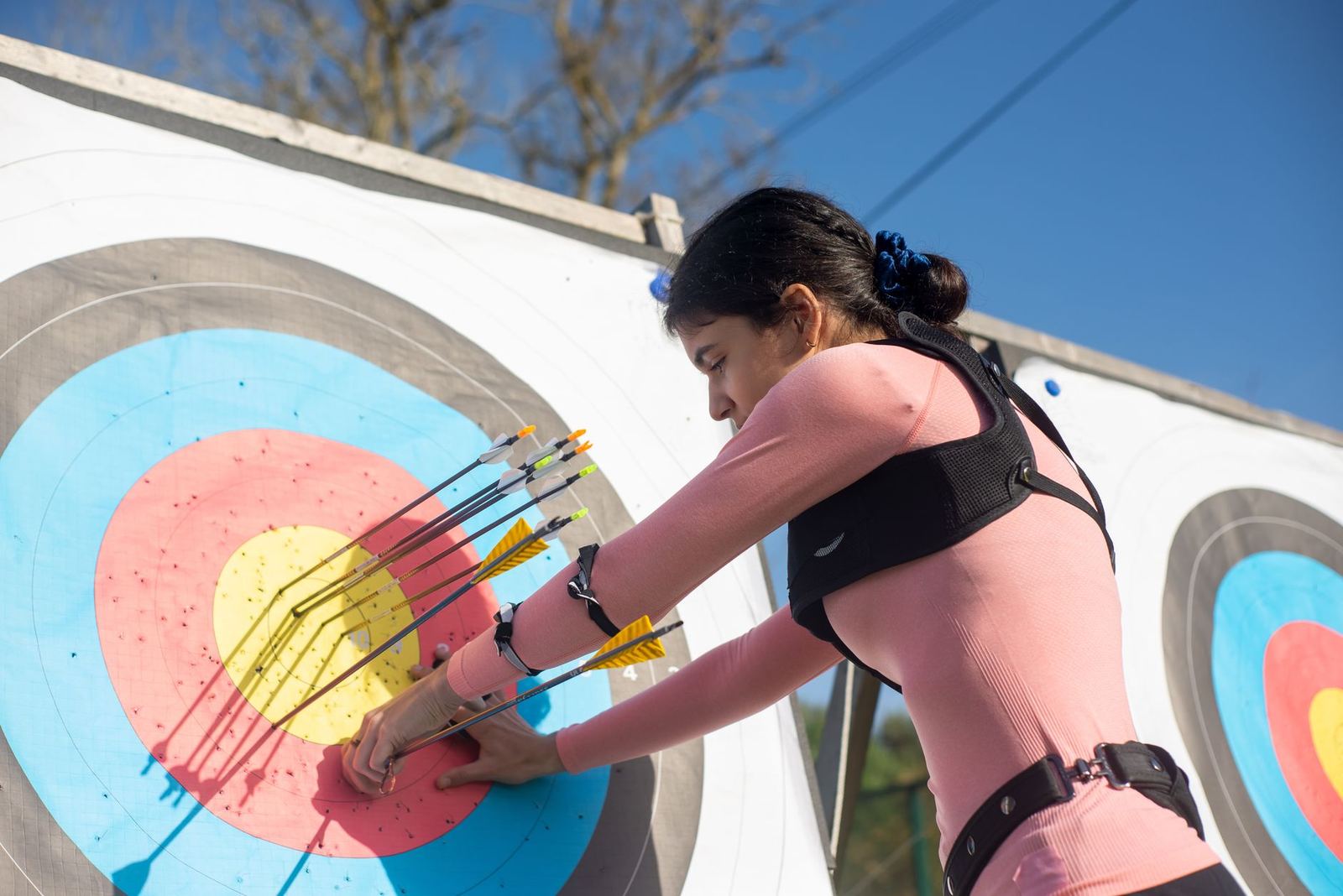
You will not be shooting at a distant target. The Raunds beginners are kept together on one side of the field, where a boss is set up at a close range of about 6 to 10 metres, according to the club. The main shooting, waiting and equipment lines are respected by beginners and full members alike.
Some clubs also send material ahead of time. At Raunds, a beginner’s handbook and an intro pack arrive by email before the course starts, and the handbook includes a glossary of terms and a copy of the club constitution, per the club’s page. Reading it first means fewer surprises on the day.
Campus clubs run things differently. The University of Waterloo club asks every new member, whatever their skill level, to book a first session on a Sunday because those are its designated training days, and it reserves its Saturday sessions for advanced shooters only, as its FAQ page says.
What to wear and what gear you need
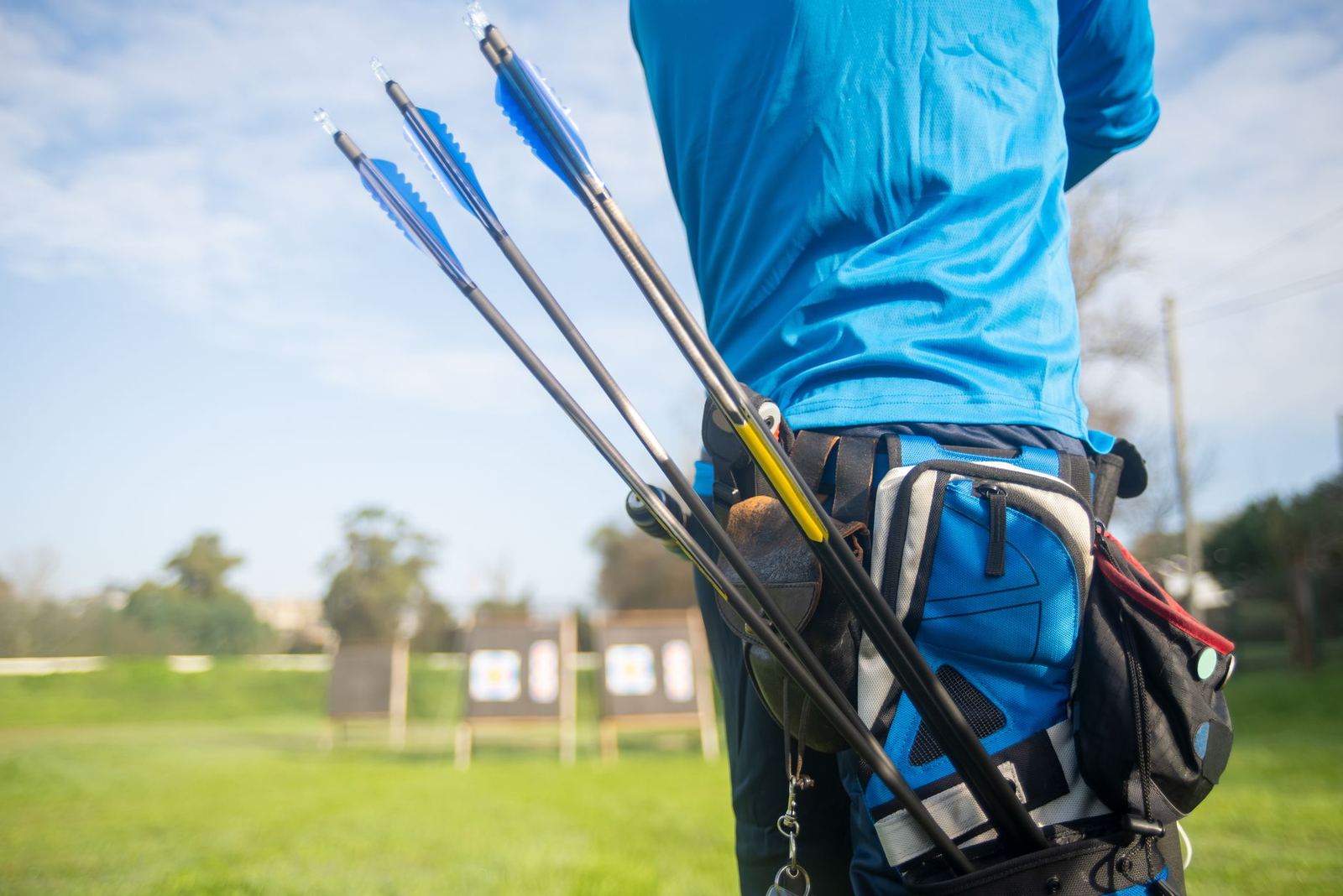
Clothing is a safety matter in archery, not a style choice. A bowstring travels fast and can catch anything loose near the bow arm or face. Clubs are consistent about this, even when they differ on everything else.
Here is the clothing advice that appears across the club pages used for this guide:
- Closed-toe shoes. Archery Australia calls comfortable clothing and closed-toe shoes compulsory, and Raunds rules out open-toed sandals and flip flops.
- Nothing loose. Raunds says toggles, tassels, baggy tops and other loose-fitting clothes are unacceptable, and Archery Australia suggests avoiding bulky jackets and hoodies with loose drawstrings.
- Tied-back hair. Long hair should be tied back, and facial or body piercings removed or securely masked.
- Layers for cold days. Several thin, tight-fitting layers are ideal for outdoor shooting in the colder months.
- Water. The Bowmen of Danesfield suggest dressing for the weather and bringing a bottle of water.
Those points come from the Raunds first-lesson page, the Archery Australia FAQs and the Danesfield membership FAQs. Raunds adds that black-soled shoes are not allowed in its sports hall, so ask a club about its floor rules before you go.
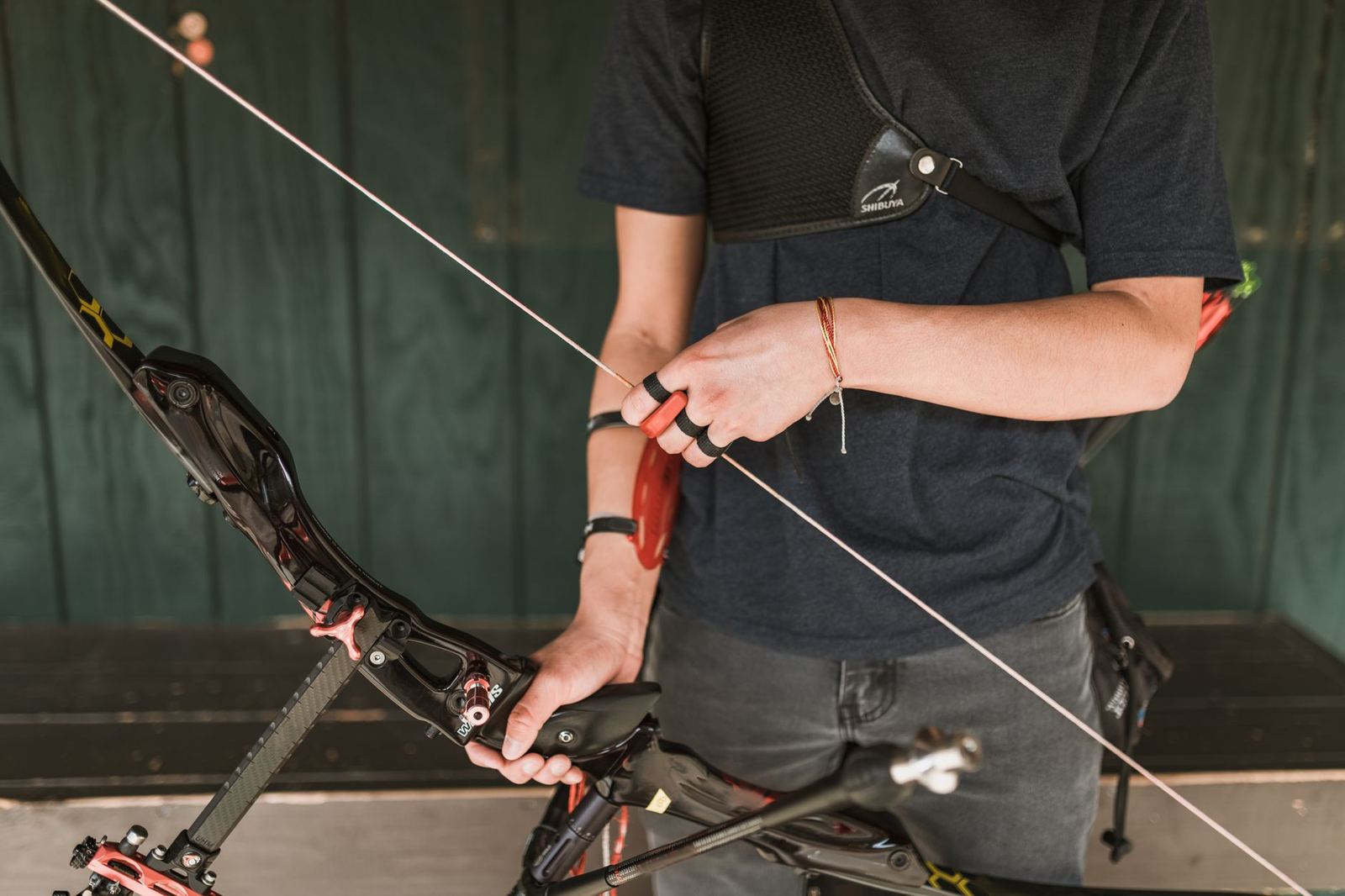
The good news on equipment is that you rarely need any. Archery Australia says most, if not all, clubs have equipment to hire for your first session, so you can get familiar with it before buying anything. The Bowmen of Danesfield say you do not need to buy equipment before joining or for a while afterwards, because the club provides bows, arrows and safety gear during induction.
Club kit is chosen with beginners in mind. Raunds keeps low-poundage beginner bows in both left- and right-hand configurations, along with basic finger tabs, arm guards and a selection of arrows, according to its first-lesson page. Danesfield’s joining form even asks for your handedness and height so that it can allocate the right bow size.
When should you buy your own? Archery Australia calls equipment highly personalised and recommends talking with experienced archers in your club first, who can point you to a reputable supplier, per its beginner FAQs. Raunds suggests only a better finger tab, arm guard or quiver after the first session, and nothing else until the course has finished.
When you are ready to look at bows, sights and accessories, the guide to archery equipment explains what each item does. If you would rather work on form first, the guide to archery techniques is the place to start.
Two worries put people off more than any others: strength and eyesight. Archery Australia says bows are available in all sorts of weights to suit every ability, so strength helps with progression but does not limit your start. It also calls archery a technique sport first and foremost before aiming, and says there are many ways to adapt it for any vision impairment, according to the same FAQs.
Etiquette and safety on the shooting line
Range etiquette is mostly common sense, but it is written down because the consequences of getting it wrong are serious. Clubs teach it in the first session, and members keep reminding each other afterwards. Learning it early is the fastest way to feel like you belong.
Most ranges use a layout of lines that keeps people in the right place:
- The equipment line. Members keep their bow boxes here, and this is a good place to wait when you arrive.
- The waiting line. This sits forward of the equipment line, and you stay behind it until you are invited forward.
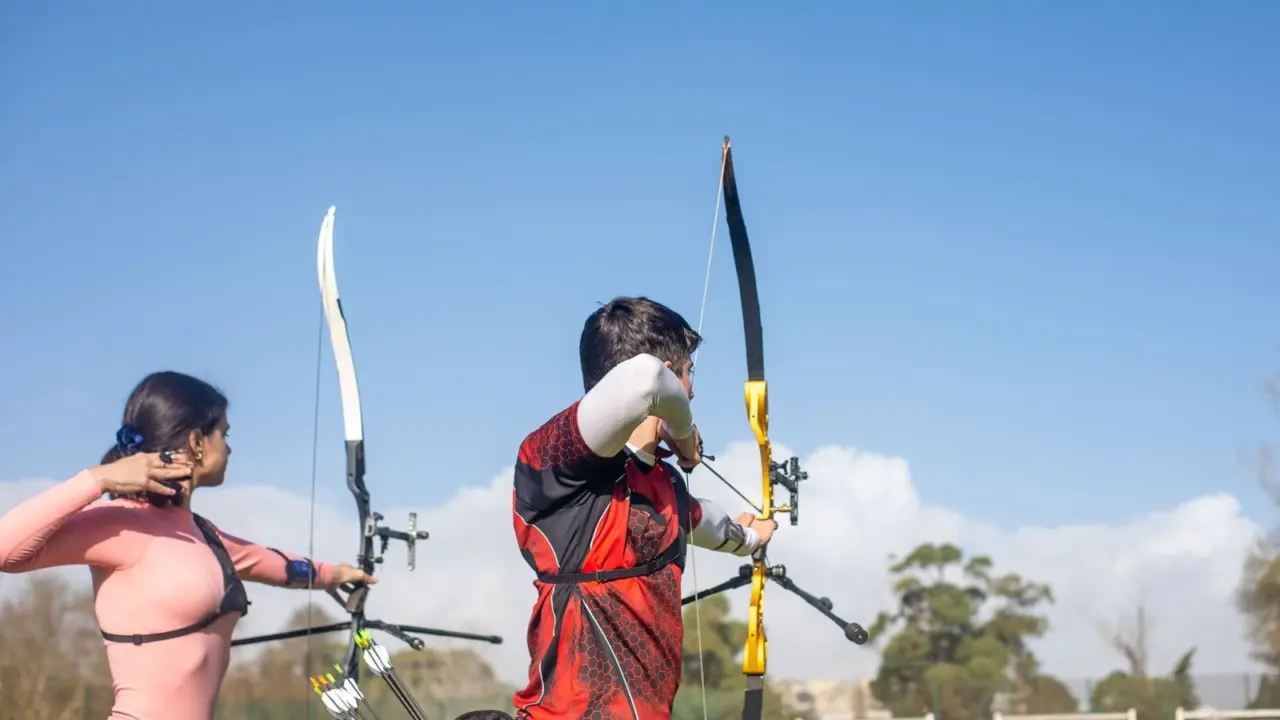
- The shooting line. This is where archers shoot, and you should not approach an archer who is standing on it.
That layout is how Archers of Raunds describes its range on its first-lesson page. The club adds that a member on the waiting line will most likely approach you anyway, and that if no one does, you can catch a member waiting and they will be happy to help. Your coach will be expecting you and looking out for you.
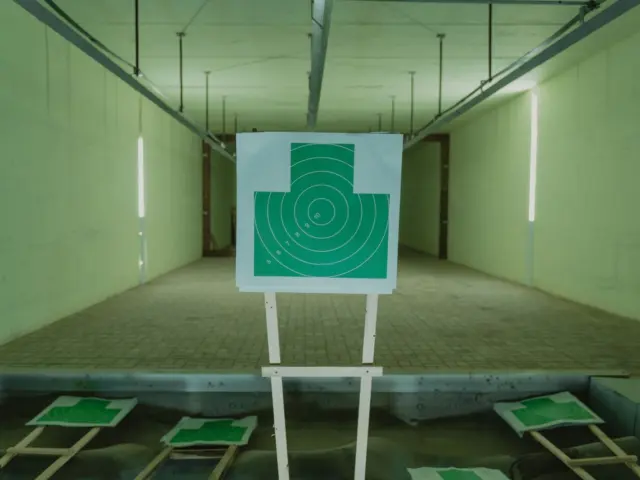
On target days there are a few extra habits to learn. The Wight Bowmen ask archers to be aware of others on their target, not to walk off the line if someone next to them is at full draw, and not to talk in a loud voice while others shoot. That matters most indoors, where space is limited, according to the club’s etiquette page.
The most important command to remember there is FAST. When danger is recognised, all archers must cease shooting immediately, as the Wight Bowmen page states. The same page notes that the target captain has full authority during the shoot, so if one speaks to you, do not take offence: they are there to look after everyone’s safety and keep club rules followed.
Archery Australia describes archery as one of the safest sports in Australia and says strict protocols keep safety a top priority, in its beginner FAQs. A club that takes the rules seriously is a good sign. For a fuller look at the rules most ranges share, read the guide to archery range safety rules.
Booking etiquette matters too. Raunds asks visitors and associates to use its booking system rather than just turning up, according to its page. Many clubs run on volunteer time, so a quick message before you arrive is a courtesy.
What do archery clubs cost?
Costs vary by country, club and age group, so treat any figure as an example rather than a rule. Archery Australia calls archery very economical compared with other sports, and says equipment can last for years if it is looked after properly. It adds that membership fees are paid annually, so you can shoot whenever suits your schedule, per its beginner FAQs.
The Bowmen of Danesfield publish a clear fee table on their 2025 membership page. The figures below are copied as examples, and a discount applies when you choose quarterly or annual payment.
| Membership type | Monthly | Quarterly | Annually |
|---|---|---|---|
| Over 21 | £22 | £65 | £225 |
| Under 21 | £13 | £35 | £118 |
| Disabled over 21 | £19 | £52 | £186 |
| Disabled under 21 | £13 | £35 | £118 |
| Associate | £17 | £45 | £159 |
Those numbers come from the Bowmen of Danesfield membership page, and the club may change them, so check before you rely on them. Paying annually costs less overall than paying monthly, which is the point of the discount. It suits you best once you know you will stay.
Other clubs charge in other ways. Raunds charges £8 per session for visiting shooters, and invites associates and visitors to use its booking system, according to its first-lesson page. The University of Waterloo club lists a fee of $25.00 per term on its FAQ page.
Before you pay for anything, ask a club these questions:
- Is equipment hire included in the beginners course or charged separately?
- Can you pay per session before you commit to a membership?
- Does the club ask for a recognised beginners certificate before you shoot unsupervised?
- What happens to your fee if sessions are cancelled?
Joining is usually a short process. At Danesfield you submit a form, the club contacts you to arrange an induction course, and the course usually runs over five consecutive Wednesdays before you receive a beginners certificate, per its membership page. For a step-by-step view, the guide on how to join an archery club walks through what to ask and what to bring.
Certificates can travel with you. Raunds says its certificate can be used to join or shoot at most Archery GB affiliated clubs in the UK, as its page explains. Experienced archers are treated differently: Danesfield will usually ask for proof of a recognised Archery GB beginners course or past membership of another club, and may ask for an informal assessment on the shooting line.
Young archers have their own rules. The Bowmen of Danesfield welcome juniors from eight years old, and say young persons under 18 must have a parent or guardian present at all times and must complete the junior consent form, per their FAQs. Check each club’s own junior policy, because the rules differ from place to place.
Competitions, events and what comes next
Many people join a club for the social side and drift into competing later. Archery Australia says many clubs offer beginner courses and pathways into social or competitive archery, and points to its Ozbow program, in its beginner FAQs. Nobody has to compete, and a good club makes that clear.
Low-pressure options exist for newcomers. The Bowmen of Danesfield encourage new members to join friendly competitions, and their Virtual Archery League is open to all members as a low-pressure way to build confidence. New members are also invited to club shoots and social events, and taking part is entirely optional, according to the club’s membership FAQs.
Clubs also shoot standard rounds so that scores can be compared over time. The Danesfield site lists the Bray, National, Portsmouth, Short Metric, St Nicholas, Western, Warwick and Windsor rounds under its resources menu, on the same membership page. If the names mean nothing to you yet, the guide to archery scoring explains how points are counted.
When you want to know how different events are organised, the guide to the types of archery competitions is a sensible next read. It helps you decide whether you want a quiet club round, a larger tournament or something outdoors.
Target shooting at a fixed range is not the only format. Some archers prefer to shoot over rough ground, which is the world of field archery, and others prefer animal-shaped targets, covered in the guide to 3D archery. Ask any club which formats its members shoot before you assume it offers them.
Archery also looks different from country to country. If you are curious about how the sport is organised abroad, the page on archery in switzerland is a good place to compare one European example with the clubs described here.
Whatever format you pick, a sensible way to choose a club is to visit with a short list of questions. Here is one you can adapt:
- Is there a beginners course, a Come and Try session or a taster, and who runs it?
- Is equipment provided, and for how long?
- What do sessions cost, and is there a trial before membership?
- Are there juniors, disabled archers and social shoots in the club?
- Do you need to book, or can you turn up?
Clubs that answer these clearly are usually the ones that look after newcomers best. Danesfield, for example, says it welcomes archers of all abilities and offers support through accessible facilities, tailored coaching or modified equipment, per its FAQs. Tell a club your needs when you first get in touch.
Frequently asked questions
Do I need my own bow to start?
Show answer
No. Archery Australia says most, if not all, clubs have equipment to hire for your first session, per its beginner FAQs. The Bowmen of Danesfield also provide bows, arrows and safety gear during induction and beginners’ sessions.
Is archery safe?
Show answer
Yes, when you follow the rules, and clubs teach those rules before you shoot. Archers of Raunds says its theory is designed to keep you and the archers beside you safe, according to its first-lesson page. The range lines and the FAST command described above do the rest.
What should I wear to a session?
Show answer
Wear comfortable clothing and closed-toe shoes, and avoid anything loose that could catch the string. The Archery Australia FAQs suggest avoiding bulky jackets and hoodies with loose drawstrings. Tie long hair back.
Can I take part if my eyesight or strength is limited?
Show answer
Usually, yes. Archery Australia says bows come in all sorts of weights to suit every ability, and that there are many ways to adapt the sport for any vision impairment, per its beginner FAQs. Tell the club what you need when you get in touch.
Can children join an archery club?
Show answer
Some clubs welcome them. The Bowmen of Danesfield accept juniors from eight years old, and under-18s must have a parent or guardian present at all times, according to the club’s membership FAQs. Policies differ, so ask each club.