Does your archery release feel messy or inconsistent? Relax your hand and let back tension, not your fingers, carry the shot. The sections below show what good looks like and how to train it.
This guide sits within the wider set of archery techniques on the site.
| Item | Key fact |
|---|---|
| Sign of a good release | Hand slides straight back without leaving your face |
| Pluck | Hand leaves the face, like waving good-bye to the arrow |
| Collapse | Hand moves forward, not backward |
| Main elements of a clean release | Three: string placement, back tension, continual movement |
| Tension drill | Three squeezed shots, then three normal arrows |
The table draws on Archery 360 and Bow International. Advice and figures can change, so check the source before you rely on them.
What a clean archery release looks like
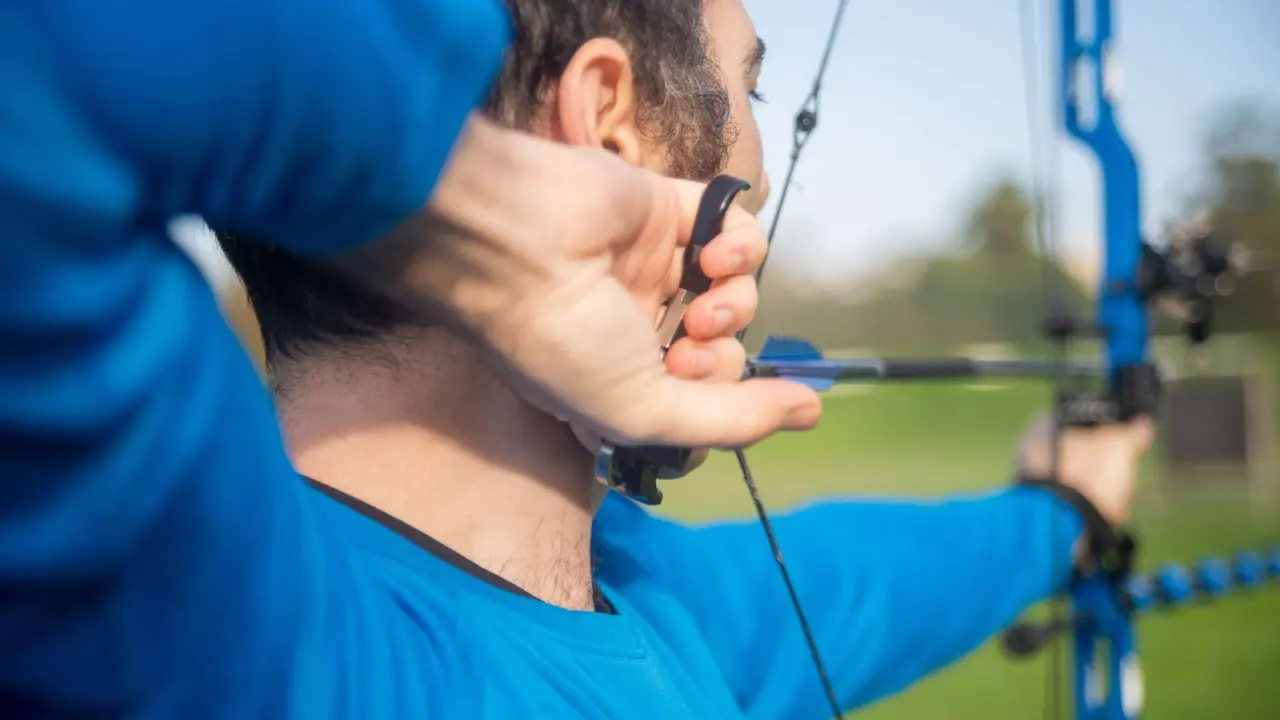
The quickest check is where your string hand goes. In a clean release, your hand slides straight back without leaving your face, and Archery 360 says it feels like pulling on a string that’s suddenly cut.
Bow International describes the ideal in similar terms. The hand relaxes and lets the string come out from under the fingers, then the fingers and hand come back close round the neck with minimal opening of the fingers, as Patrick Huston explains.
That tells you something useful. The way your hand moves after the shot is a symptom of the forces inside the hand during the shot, so the fix is in the cause rather than in steering the hand. Legend Archery makes the same point: the release is a consequence of other things happening correctly, not a deliberate action in its own right.
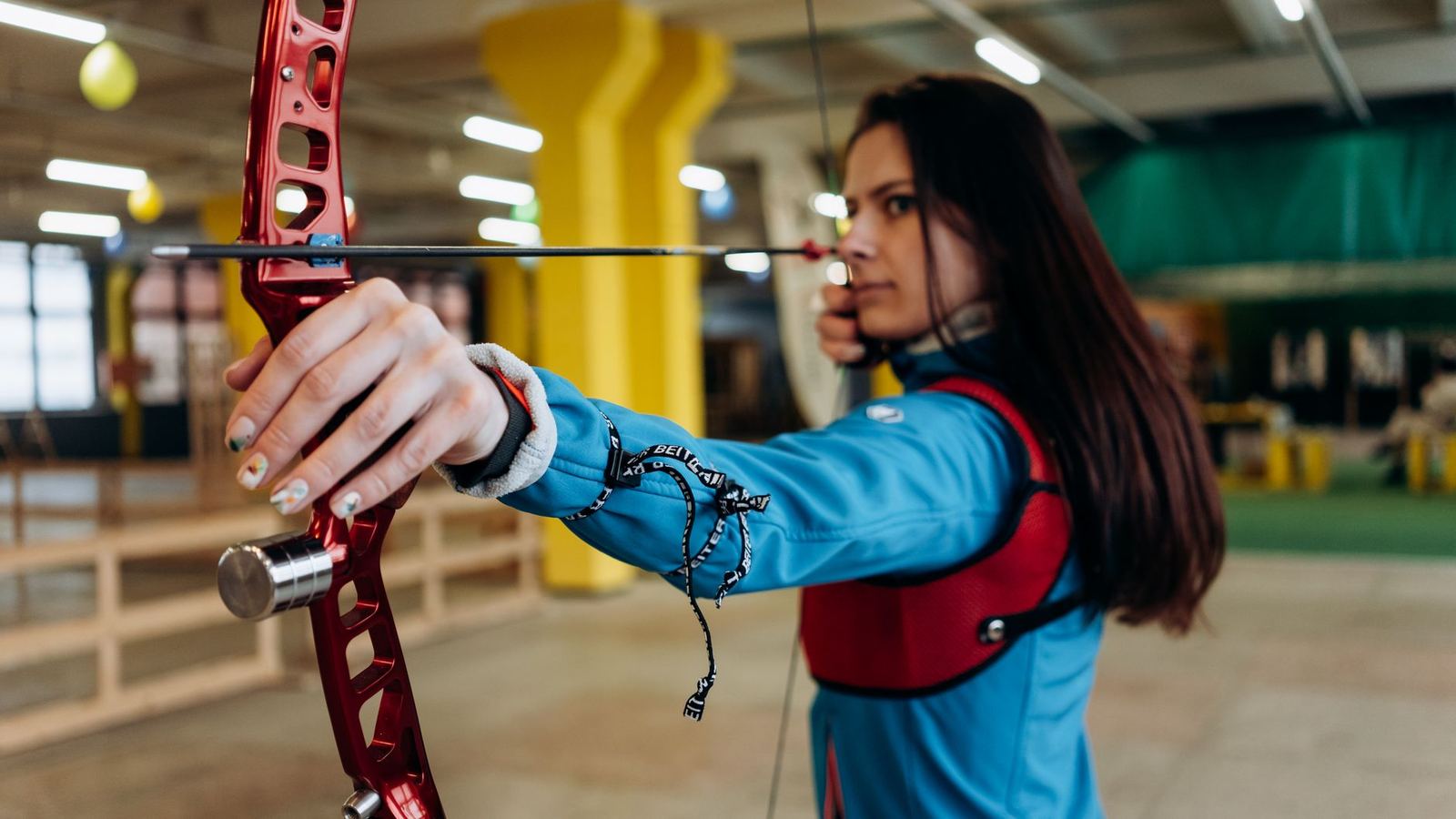
Pluck, collapse and other release faults to spot
A few faults show up again and again. Learn to recognise them, because each one points back to a different cause.
- Pluck: your hand leaves your face and looks like you’re waving good-bye to the arrow. Archery 360 says plucks are usually caused by excess tension in your hand, forearm and bicep.
- Collapse: your hand moves forward, not backward. The same source says a collapse causes low shots and indicates poor alignment and lost back tension.
- Tight bow hand: Legend Archery notes that the bow torques in the hand and the arrows scatter horizontally.
Legend Archery also describes plucking as actively pulling the fingers away from the string sideways instead of letting them relax and fall open. That makes the string kick sideways and affects arrow flight significantly.
To see which fault you have, film yourself. Archery 360 suggests video or a lesson with a coach, and Legend Archery recommends a clip from behind the string arm to check whether the hand moves consistently after the shot.
How do you place the string in your fingers?
Start with repeatability. Bow International calls it the most crucial element: the string goes in exactly the same place in your hand each time, because otherwise the pressures of the shot change and your release varies. See the full explanation at Bow International.
The same article suggests a hook like this:
- Inside the first joint of your index finger.
- Just behind the joint of your middle finger.
- In the joint of the ring finger.
Hold the string very lightly and try not to engage your fingers. Then let the tendons engage and your fingers will roll open slightly, which Bow International says should happen.
Other writers give a similar picture with small differences. Realtree suggests gripping the string in the first crease of your two or three fingers, or somewhere in that vicinity, as long as your fingers stay in line with the back of your hand. It also says to keep your fingers limp, relaxed and torque-free.
Legend Archery adds that the thumb and little finger should be relaxed and tucked away from the string. Treat these as starting points and adjust to your own hand.
Back tension: what really moves the string hand
You can’t open your fingers fast enough to avoid the bowstring, and Archery 360 adds that simply opening them won’t produce a clean release. Instead, relax your fingers so the bowstring pushes them out of its way. The less resistance it meets, the cleaner the release.
That is why back tension matters. Relaxing the muscles of your hand, wrist, forearm and bicep lets your bone structure and large back muscles support the draw weight, and the rhomboids around your shoulder blade are the back muscles best used in archery.
Bow International agrees on the mindset. When the shot breaks, do not think of opening the fingers to let the string out, because with correct back tension the string will knock your fingers out of the way. Without a fully engaged back, you are likely to get a dead release and left-and-right arrows, according to Bow International.
Learn the feeling with a stretch band
Archery 360 suggests learning back tension on a stretch band before the bow:
- Pull the stretch band and imagine a string tied to your elbow.
- Pretend the string pulls your elbow back and around your head as you reach full draw.
- Notice your shoulder blade moving closer to your spine as the elbow rotates behind your head.
- Once you have mastered it on the band, try it with your bow.
Elbow height matters too. Nock On Archery says that if your elbow is dropped down, you automatically recruit your bicep and deltoid, and the release hand then travels in an arc away from your face. That article is written around a release aid, but the arm-muscle problem matches the pluck described above.
A settled anchor also gives this movement time to develop. Legend Archery says skipping or shortcutting the anchor means the back tension sequence never has time to set up properly, so review your archery anchor point before you change anything else.
Drills that train a relaxed release
Good habits come from deliberate practice, not from thinking about the release mid-shot. These drills come from the sources above.
- Squeeze-and-relax: Bow International suggests drawing up, squeezing your hand hard, then softening it. Do three shots this way, then three normal arrows, and repeat. It may take multiple sessions, so don’t worry if it doesn’t click straight away.
- Blank bale: Legend Archery recommends shooting at a blank bale from one to two metres, which removes the distraction of where the arrow lands so you can focus on string-hand movement and follow-through.
- Shot trainer: Nock On Archery suggests five to 10 minutes daily, then after a week moving to your bow at close range, five to 10 yards, without worrying about accuracy at first.
- Resistance band: Legend Archery lists band work off the bow as a way to build muscle memory for the back tension movement without putting arrows downrange.
Once the release feels calmer, pair it with your aiming method. If you shoot by gap, the guide to gap shooting archery is a sensible next read.
Keep checking your release over time
The release is not something you fix once and forget. Legend Archery says even competitive archers return to release fundamentals when scores plateau or groups become erratic, so treat it as a recurring checkpoint.
It also suggests splitting your sessions. Make some purely technical, with a lower arrow count and a deliberate focus on the feel of each shot, and let others build volume.
Finally, get live feedback when you can. Archery 360 says mastering the release is difficult and takes time, but good help makes it easier, and a coach can teach the finer points of back tension.
Frequently asked questions
Is the release something you do on purpose?
Show answer
Ideally it happens as a result of correct back tension movement rather than a conscious finger action, according to Legend Archery. Train the back movement and let the fingers respond to it.
Should you open your fingers to let go of the string?
Show answer
No. Bow International says not to think of opening the fingers, because the string will knock them out of the way when back tension is correct. Archery 360 also says simply opening your fingers won’t produce a clean release.
How can you check your release without a coach?
Show answer
Film yourself shooting, ideally from behind the string arm, and watch whether your hand slides straight back or leaves your face. A coach adds live feedback that video can miss.
How long does a better release take to learn?
Show answer
Archery 360 says mastering the release is difficult and takes time. Bow International notes that relaxing the hand may take multiple sessions, so steady practice matters more than quick fixes.