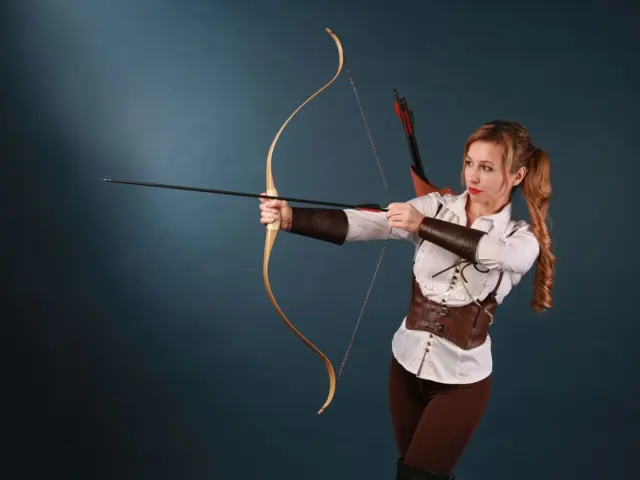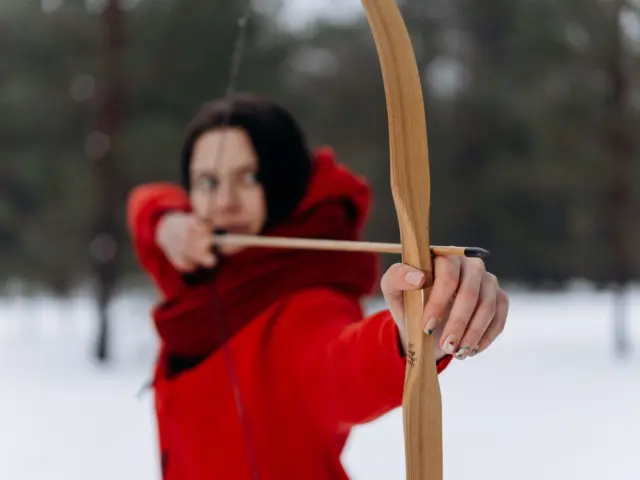
Shooting a bow with no sight and unsure where to look? Gap shooting archery is the usual answer: you use the arrow point as your reference and change the gap between it and the target as the distance changes.
This guide is part of the wider topic of archery techniques, and it focuses on one way to aim a bow that has no sight.
| Item | Value |
|---|---|
| Aiming reference | The point of the arrow, with no sight |
| Longer distances | Decrease the gap between the point and the target centre |
| Anchor point and hand position | Kept the same at every distance |
| Main drawback | Less precise, because the gap is hard to judge |
| Ways to judge the gap | Target rings, arrow thickness, riser markings |
These points come from ImproveYourArchery.com’s guide to aiming a bow and Wikipedia’s page on instinctive shooting. Guidance and figures can change, so check the source before you rely on them.
What gap shooting means
Gap shooting is a way to aim a bow that has no sight. Wikipedia describes the archer mentally calculating the distance to the target, focusing the bow window and the arrowhead, aiming a point on the bow at the target, and using the arrowhead to direct the trajectory.
In plain terms, you are reading a small visual space between the arrow tip and the spot you want to hit. Because you reason your way to that picture, Wikipedia calls this kind of shot more thoughtful and less instinctive than pure instinctive shooting.
The same page describes instinctive shooting as a method that works without aiming devices (sights) or collimation between the target and the bow. Gap shooting shares the lack of a sight, but it adds a deliberate reference point, which is the arrow itself.
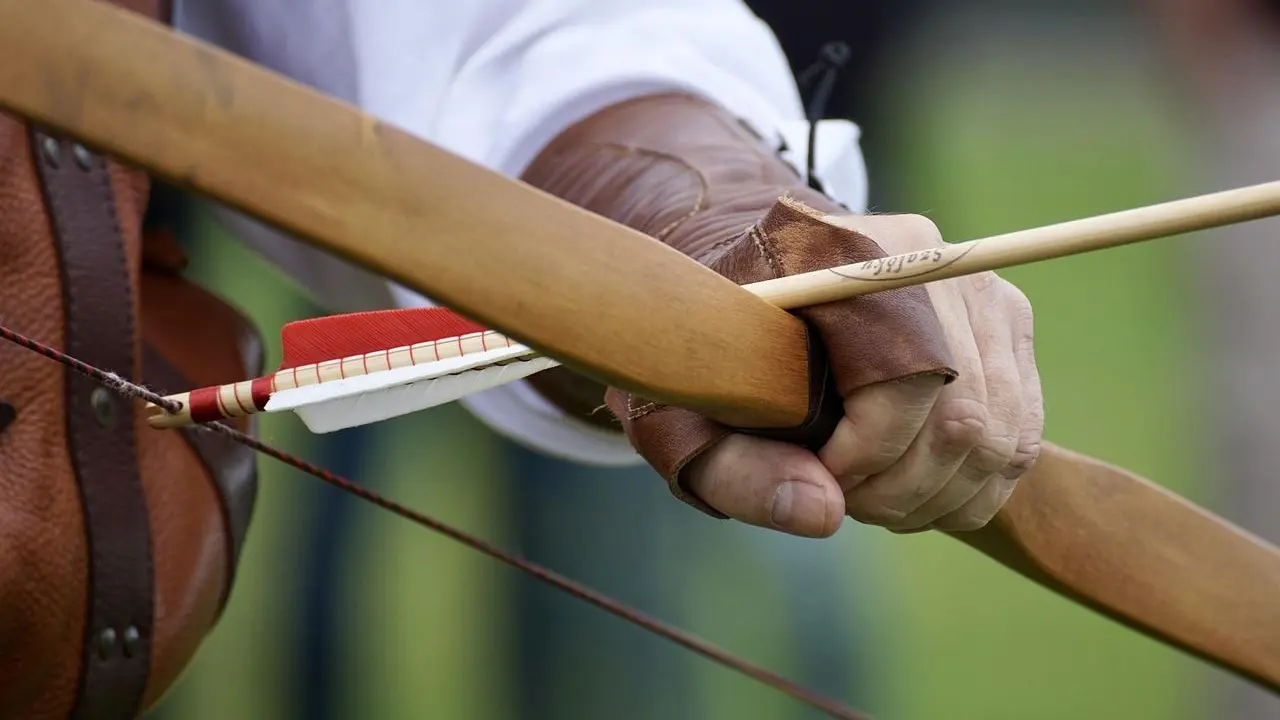
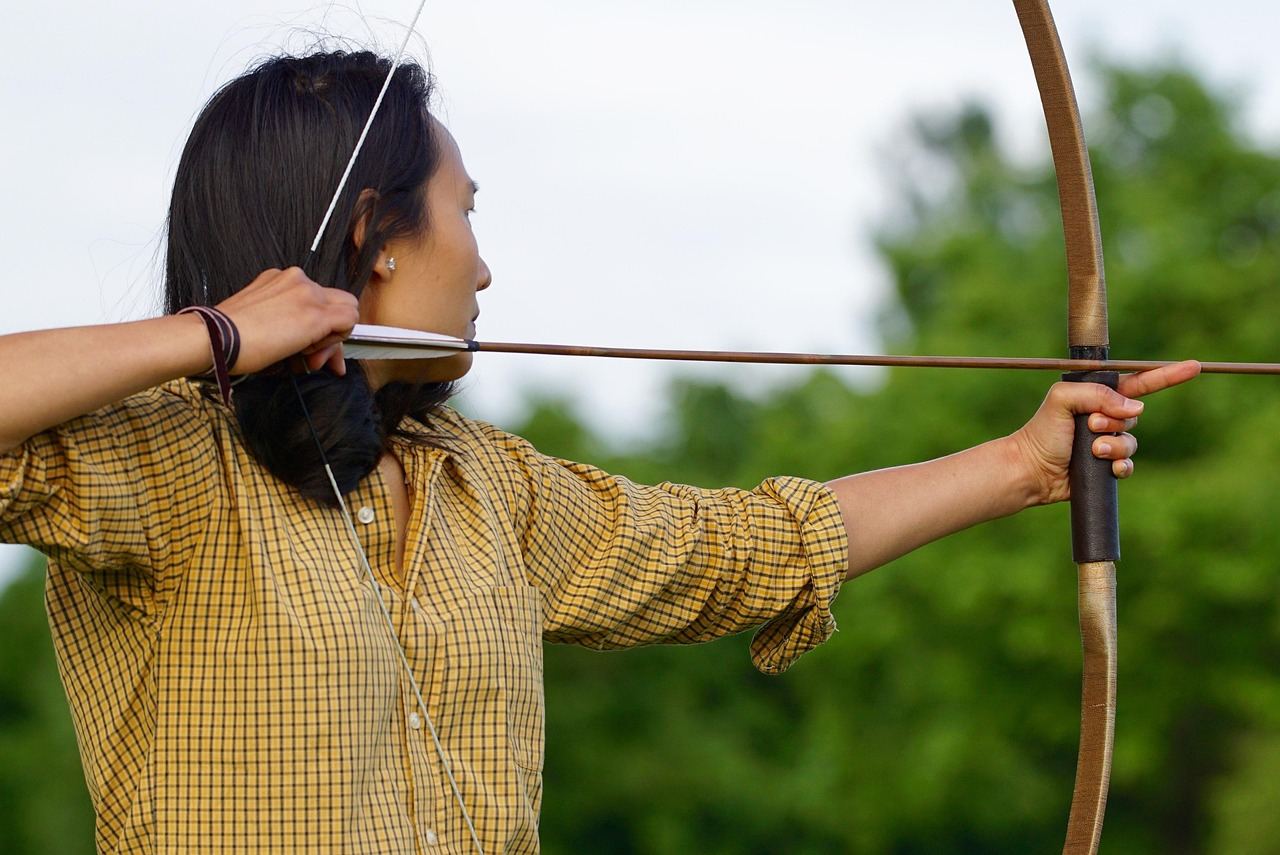
Because the arrow is your reference, ImproveYourArchery.com advises keeping the arrow close to your eye while shooting. That makes the tip easier to see against the target.
How the gap changes with distance
The core idea is simple: your anchor point and hand position on the string stay the same, whatever the distance. Only the gap between the arrow tip and the target changes.
For longer shots, the source says you decrease the gap between the point and the centre of the target. So you are not changing how you draw or where your fingers sit. You are changing what you see over the arrow.
That means you have to remember how big the gap should be at each distance. There are a few ways to build that memory:
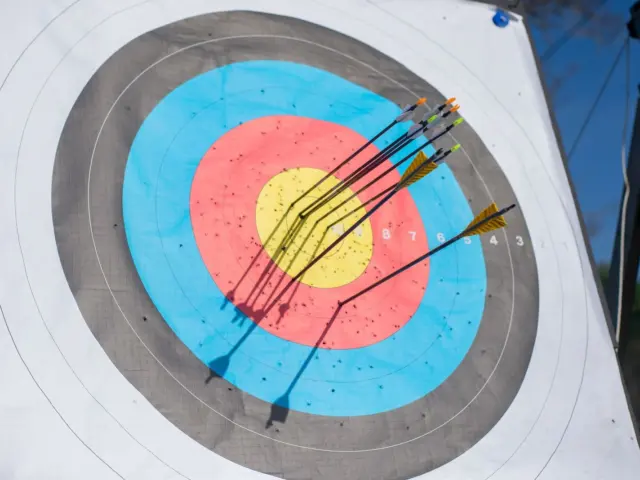
- Use the rings on the target, if you shoot at a target face.
- Use the thickness of the arrow as a measuring stick.
- Use markings on the riser.
ImproveYourArchery.com adds that most archers do this instinctively, because these measuring methods can distract you from using the right technique and form. They are tools to understand the idea, not a checklist to run through on every shot.
Gap shooting compared with other sightless methods
Gap shooting is not the only way to aim without a sight. Knowing the neighbours helps you see what makes it different.
- Gap shooting: you use the visual gap between the arrow point and the target, and you keep the same anchor point and finger placement.
- String walking: your fingers sit closer to the arrow for long-distance shots and farther away from the arrow for short-distance shots.
- Split vision: you use peripheral vision to be aware of the arrowhead while your gaze stays fixed on the target.
- Instinctive shooting: you focus on the target alone, with no sight and no deliberate reference on the bow.
Wikipedia notes that American Howard Hill used split vision, and that it is sometimes mistaken for instinctive shooting because it is very similar. Gap shooting, by contrast, asks you to consciously use the arrow tip as a guide.
The reason many archers like the gap method is practical. With string walking you move your fingers on the string, but with gap shooting your hand stays put and your picture over the arrow does the adjusting.
Strengths and limits of the method
ImproveYourArchery.com says most archers prefer gap shooting because it lets them keep both a consistent anchor point and consistent finger placement on the string. A repeatable anchor and hand position are the foundation of a repeatable shot.
The trade-off is precision. The same source says the method is less precise, because it can be difficult to see the exact distance between the tip of the arrow and the centre of the target.
It also helps to be honest about the learning curve. Aiming without a sight is described as much more difficult and less intuitive than aiming with one, and it is more restrictive in your anchor point.
None of this means you should obsess over aim. The same guide says your overall form and technique require much more work than your aiming technique.
A simple way to start practising
Treat the steps below as an order of priorities rather than a rigid recipe. Each one comes from the guidance in the sources above.
- Learn the basics first. Wikipedia says that to perform instinctive-style archery properly you need to learn the basics of archery, and the same logic applies to gap shooting.
- Settle on one anchor point and hand position, and keep them the same at every distance.
- Bring the arrow close to your eye so the tip is easy to see against the target.
- Pick a way to judge the gap, such as the target rings, the thickness of the arrow or a riser marking.
- Remember how big the gap looks at each distance, and decrease it as the target gets farther away.
- Let the picture become automatic. Most archers end up doing this instinctively rather than measuring every time.
Clean form comes before clever aiming, so it is worth pairing this method with a look at your archery release. A tidy finish to the shot keeps the gap you chose from being wasted.
When your groups wander, the cause is more often form than aim, so the guide on how to improve archery accuracy is a sensible next read.
Frequently asked questions
What is gap shooting in archery?
Show answer
It is a way to aim a bow without a sight. You use the point of the arrow as a reference and judge the visual gap between it and the target.
Do I need a sight for gap shooting?
Show answer
No. The method is for aiming without a sight, using the arrow point as your reference.
Is gap shooting accurate?
Show answer
It can work well, but ImproveYourArchery.com calls it less precise than some alternatives, because the exact gap is hard to see. Good form matters more than the aiming method.
How is gap shooting different from string walking?
Show answer
With gap shooting your anchor point and finger placement stay the same, and the gap over the arrow changes. With string walking your fingers move along the string, closer to the arrow for long shots and farther away for short shots.
Is gap shooting the same as instinctive shooting?
Show answer
No. Wikipedia describes gap shooting as more thoughtful and less instinctive, because you calculate the distance and use a reference point on the bow and arrow.