Starting out and overwhelmed by choices? The core archery equipment is a bow, string, arrows, arm guard, finger tab and quiver. Pick the bow style first, then fit everything else to it.
| Item | Key fact |
|---|---|
| Recurve ranking round | 72 arrows at 70 metres on a 122cm target face |
| Compound ranking round | 72 arrows at 50 metres on an 80cm target face |
| Indoor archery distance | Usually over 18 metres |
| Basic compound maximum draw weight | 20 lbs |
| Front stabilizer limit (fixed pins) | 12 inches in total length |
These figures come from the World Archery glossary (2016) and the USA Archery equipment specifications for its Achievement Program. Rules and formats can change, so check the source before you rely on them.
What archery equipment do you need to get started?
Start Archery’s beginner kit guide says archery can involve a large range of equipment and accessories, yet getting going takes just the basics. Those basics are a bow, a string, some arrows, a bracer, a finger tab, a quiver, a bow stand, a bow stringer and a target to shoot at.
That list is easier to digest when you see what each item does:
- Bow: a piece of curved sporting equipment, joined at both ends by a bowstring, used to shoot an arrow.
- String: attaches to the limbs on a recurve and a barebow, and is pulled back and let go to shoot the arrow.
- Arrows: the projectiles a bow shoots, made of a point, shaft, fletching and nock.
- Bracer (arm guard): keeps loose clothing out of the way of the string and stops the string hitting your arm.
- Finger tab: protects the fingers that draw the string.
- Quiver: holds your arrows.
- Bow stand: holds the bow off the ground when you are not shooting.
- Bow stringer and target: the last two items on the starter list.
Not every item applies to every bow style. A release aid belongs to compound archery, a clicker belongs to recurve, and a longbow keeps accessories to a bare minimum. Choosing the bow style first therefore saves you from buying things you will never use.
It also helps to talk to people who shoot every week. Visiting local archery clubs is a sensible way to see different bow styles up close before you spend money.
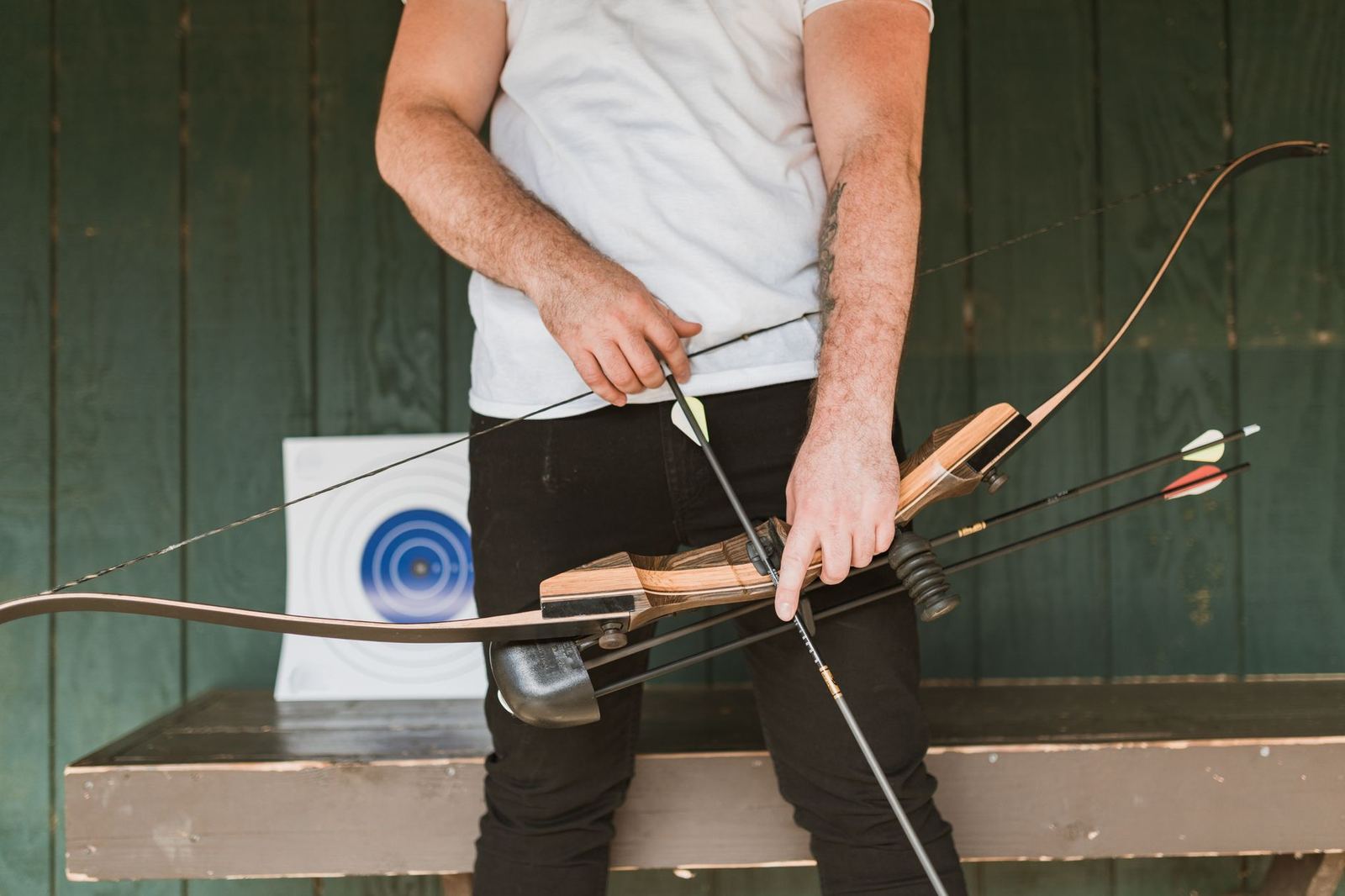
Bow styles: recurve, compound, barebow and longbow
Four bow styles cover most of what you will meet in shops and at ranges. Each one changes which accessories you need, so this section is the foundation of your kit list.
Recurve bow
According to Start Archery, recurve archery is the most common of all bow styles, and it is likely to be the bow you start on. The name comes from the limbs, which curve at the top and the bottom.
The World Archery glossary describes a recurve as a riser and two limbs that curve back away from the archer, linked by a bowstring drawn with the fingers. As of that glossary’s 2016 edition, stabilisers and a clicker are permitted on a recurve, a magnifying sight and release aid are not, and the bow is used in the Olympics and Paralympics. You can read the full entry in the World Archery glossary.
Compound bow
A compound bow works on a system of cams and strings, and unlike a recurve it does not dismantle, according to Start Archery. Because the cams work with the strings and cables to take the weight on the draw, less physical strength is needed to shoot it.
The same guide says compound bows are more accurate than any other bow style because they are faster. The World Archery glossary of 2016 adds that a magnifying sight and release aid are permitted, and that the compound is not used in the Olympics but is used in the Paralympics. Its glossary entry also explains that the cam system increases the efficiency of the energy passed to the arrow.
Barebow
Barebow is a recurve without accessories such as a sight or stabilisation, and the riser can be a recurve riser with the same limbs. The World Archery glossary defines it as a recurve bow, bowstring and arrow rest, shot using the fingers, with no sight or stabiliser permitted, as of its 2016 edition (glossary).
Start Archery calls barebow a purer and more challenging version of archery because the bow carries no sighting accessories. Fixed weights can still be added to the bottom of the riser, which gives the bow a steadier feel in the hand (guide).
Longbow
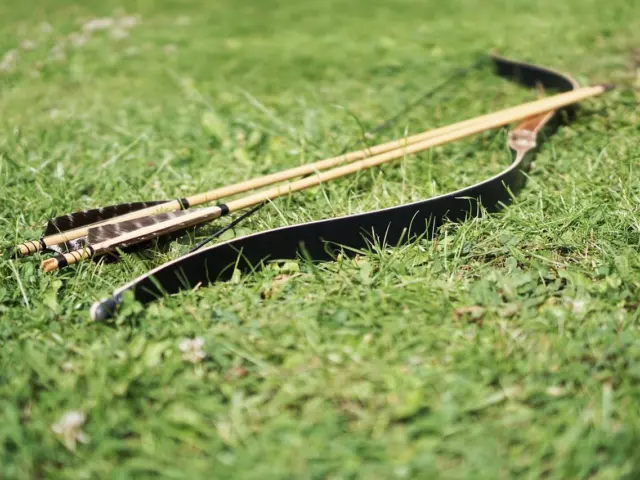
The glossary describes the longbow as a bow popular in England in the middle ages, up to two metres long and made of yew. Start Archery adds that a longbow has no stabilisers or accessories except a rubber band used for sighting, which makes it the most traditional version of the sport. Both statements are on the World Archery glossary and the Start Archery guide.
If you are torn between the two classic wooden-style and modern-style choices, the comparison of longbow vs recurve sets them side by side. For a wider tour of every style, the overview of types of archery bows goes further.
A quick way to choose
- Choose a recurve if you want the most common starting point and a bow used in the Olympic Games.
- Choose a compound if you like the idea of cams, a sight with magnification and a release aid.
- Choose barebow if you want the challenge of shooting without sight or stabiliser.
- Choose a longbow if the traditional, accessory-free style appeals, as at historical re-enactments.
Parts of a bow and what each one does
Knowing the vocabulary makes shop conversations, club advice and online guides far easier to follow. Here are the parts you will see most often, drawn from the glossary and Start Archery’s guide.
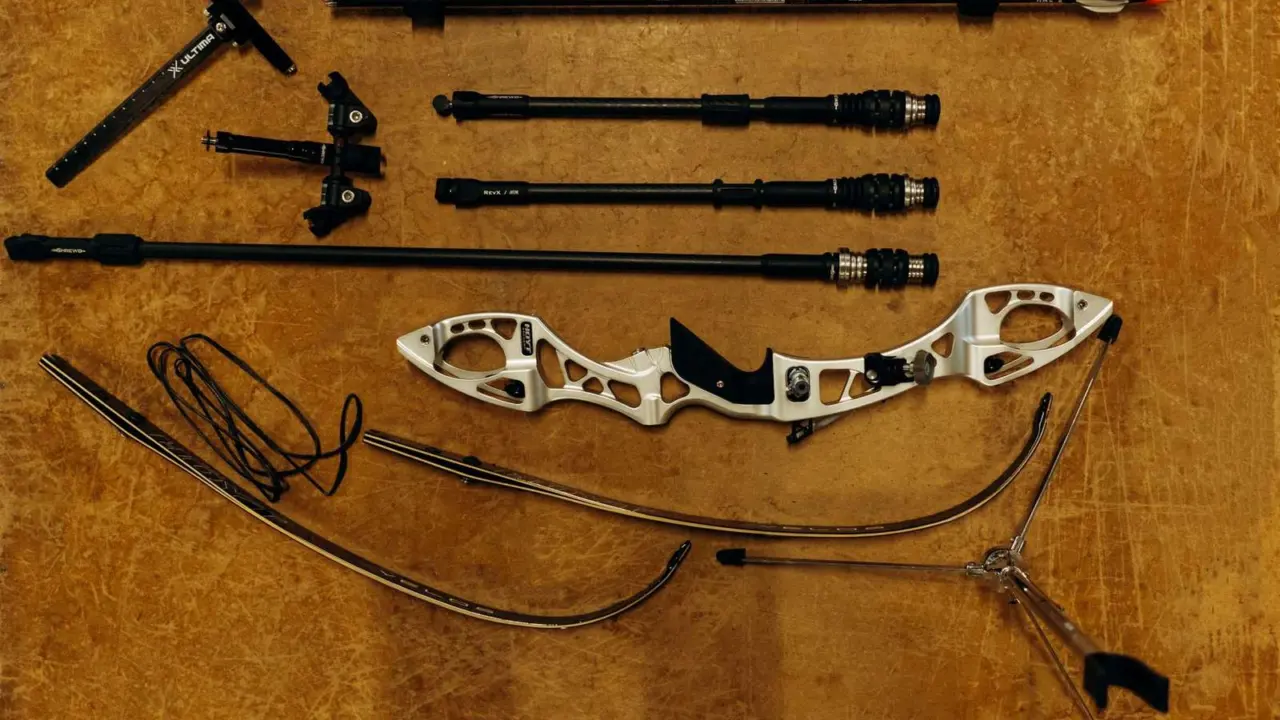
- Riser: the rigid centre section of a bow into which the limbs attach. It is where you hold the bow, and it can be left-handed or right-handed to suit you.
- Grip: the wooden or plastic part in the centre of the riser that you hold.
- Limbs: the parts of a bow that bend to propel an arrow on release.
- Bowstring: usually made of synthetic materials, it attaches to both ends of the bow and gives energy to the arrow on release.
- Serving: string wrapped around the ends and centre of a bowstring to protect it from wear.
- Arrow rest: a simple device that fits to the riser to support the arrow while it is shot.
- Pressure button (plunger): a sprung cushion that helps the arrow leave the bow cleanly and fly straight.
- Clicker: a draw-length check on a recurve that makes an audible sound when the arrow reaches the desired draw length.
- Sight: a recurve sight is adjusted to help arrows hit the target, while compound bows add a scope that magnifies it.
Left- and right-handed gear is a common beginner trap. The glossary defines a left-handed archer as someone who holds the bow in the right hand and draws with the left, so match the riser and arrow rest to the hand you draw with. Arrow rests, Start Archery notes, are available for left and right-handed bows.
Compound-only parts
A compound bow adds a few components you will not find on a recurve. The glossary lists the cam, an elliptical component over which the bowstring runs that decreases the draw weight needed to hold the bow at full draw. It also lists the D-loop, a piece of string tied to the bowstring to which a release aid attaches, and the peepsight, a circular device in the string through which the archer looks at the sight.
A kisser button is an optional button on the bowstring that you touch to a spot on your face, usually the lips, for a consistent vertical reference. It ties into your anchor point, the consistent place on your face where the string hand comes at full draw.
Draw weight and draw length
Two measurements shape almost every purchase. The glossary defines draw weight as the peak force required to draw the bow to full draw, usually measured in pounds. The guide to bow draw weight helps you think about what suits you.
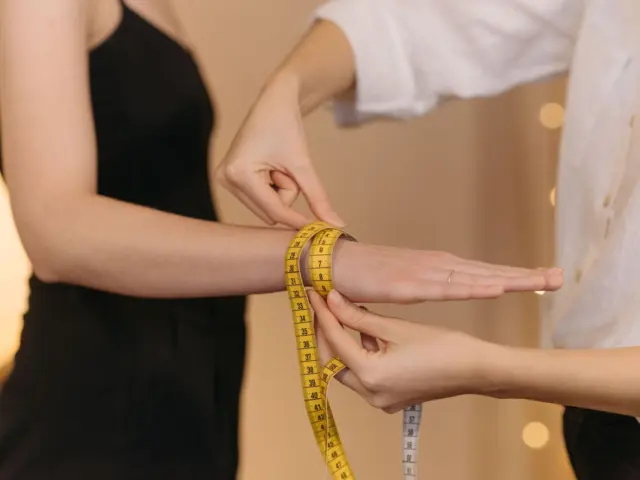
The glossary defines draw length as the distance between the arrow rest and the back of the arrow at full draw. To find yours, follow the steps on how to measure draw length, because it feeds into arrow length and bow choice.
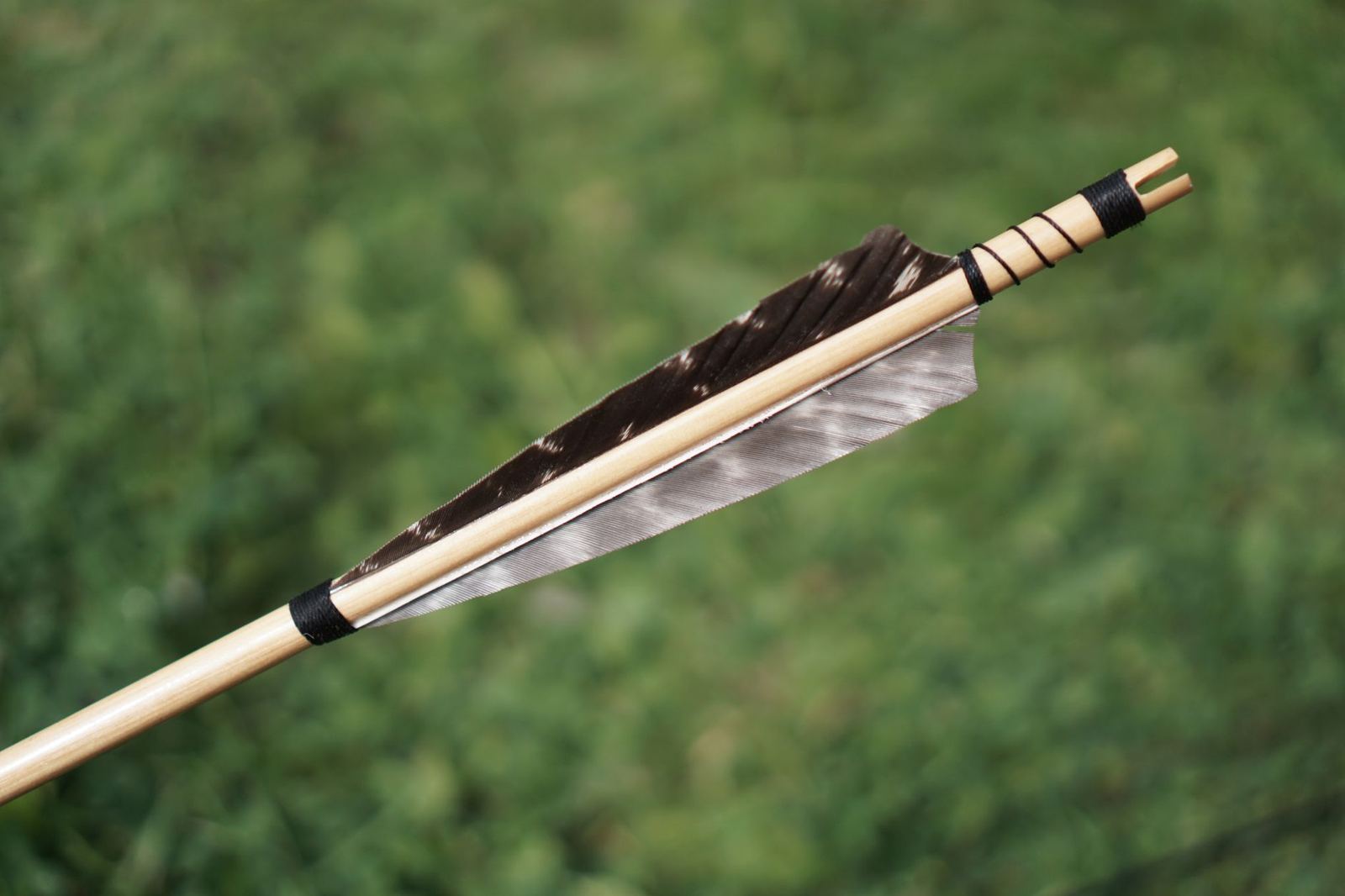
Arrows: shafts, nocks, fletchings and points
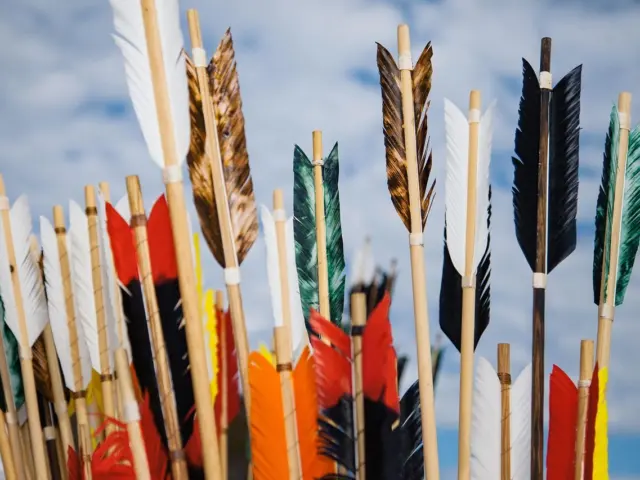
The glossary defines an arrow as the projectile a bow shoots, made of several parts: point, shaft, fletching and nock. Start Archery gives a short description of each, and together they decide how the arrow behaves in flight.
- Shaft: the main body of the arrow, which can be solid wood or an aluminium or carbon tube.
- Nock: the groove at the end of an arrow that clips onto the bowstring.
- Fletchings: plastic or feather attachments on the back of the shaft that provide stability during flight.
- Pile (point): the point of the arrow, often made of a heavier metal than the shaft to help it fly straight.
Start Archery says arrows can be wooden, aluminium, carbon or a carbon and aluminium combination. It also says that choosing the right arrow stiffness and length for you is vital. Both points are in the beginner kit guide.
Why length matters
The same guide warns that you must never use an arrow that is too short. When you draw it, there is a risk it can fall off the arrow rest and damage the bow or, worse, damage you. Treat that as a firm rule when you borrow or buy arrows.
Stiffness and choosing arrows
Stiffness is usually described with the term spine, and it needs to suit your bow. The explainer on arrow spine covers it in more depth.
When you are ready to buy, work through the checklist for how to choose archery arrows. Take your draw length and bow style with you, because both narrow the options.
Protective gear and accessories
Accessories look minor next to a bow, yet several of them protect your arm, fingers and clothing. They also make a long session more comfortable, which in turn helps you keep shooting.
Arm and chest protection
The glossary describes an armguard as an accessory that protects the arm from the string when an arrow is released, made of plastic or leather and worn on the inside of the forearm. Start Archery’s guide says a bracer fits to the inside of the arm holding the bow, between the elbow joint and the wrist, with the widest end closest to the elbow. It stops the string hitting the arm, which could cause bruising (guide).
A chestguard covers the side of the chest closest to the bow and keeps clothes out of the path of the bowstring, according to the World Archery glossary.
Finger tab and release aid
The glossary describes a finger tab as an accessory worn on the draw hand of a recurve archer, with a flat piece of leather that protects the string fingers. Start Archery adds that tabs are secured over the fingers for a close, comfortable fit, that some models adjust to the size of your hand, and that barebow archers use a different type of tab from recurve archers. The page on the archery finger tab explains how to pick one.
A release aid is for compound archers. Start Archery explains that it is a mechanical device that helps pull back the string, because the poundage of the bow is too much for the fingers. The glossary says it attaches via a D-loop and minimises inconsistencies.
Carrying, holding and stringing
- Side quiver: attached to a belt and worn around the waist.
- Ground quiver: placed on or into the ground to hold arrows next to you, and some models can also hold bows when they are not in use.
- Bow stand: a simple support that holds a bow off the ground when it is not being shot.
- Finger sling: a piece of string that goes around a finger and thumb holding the bow, so the bow is not dropped while shooting.
A bow stringer is on Start Archery’s starter list, so budget for one. If you pick a traditional bow, learn how to string a longbow before your first session.
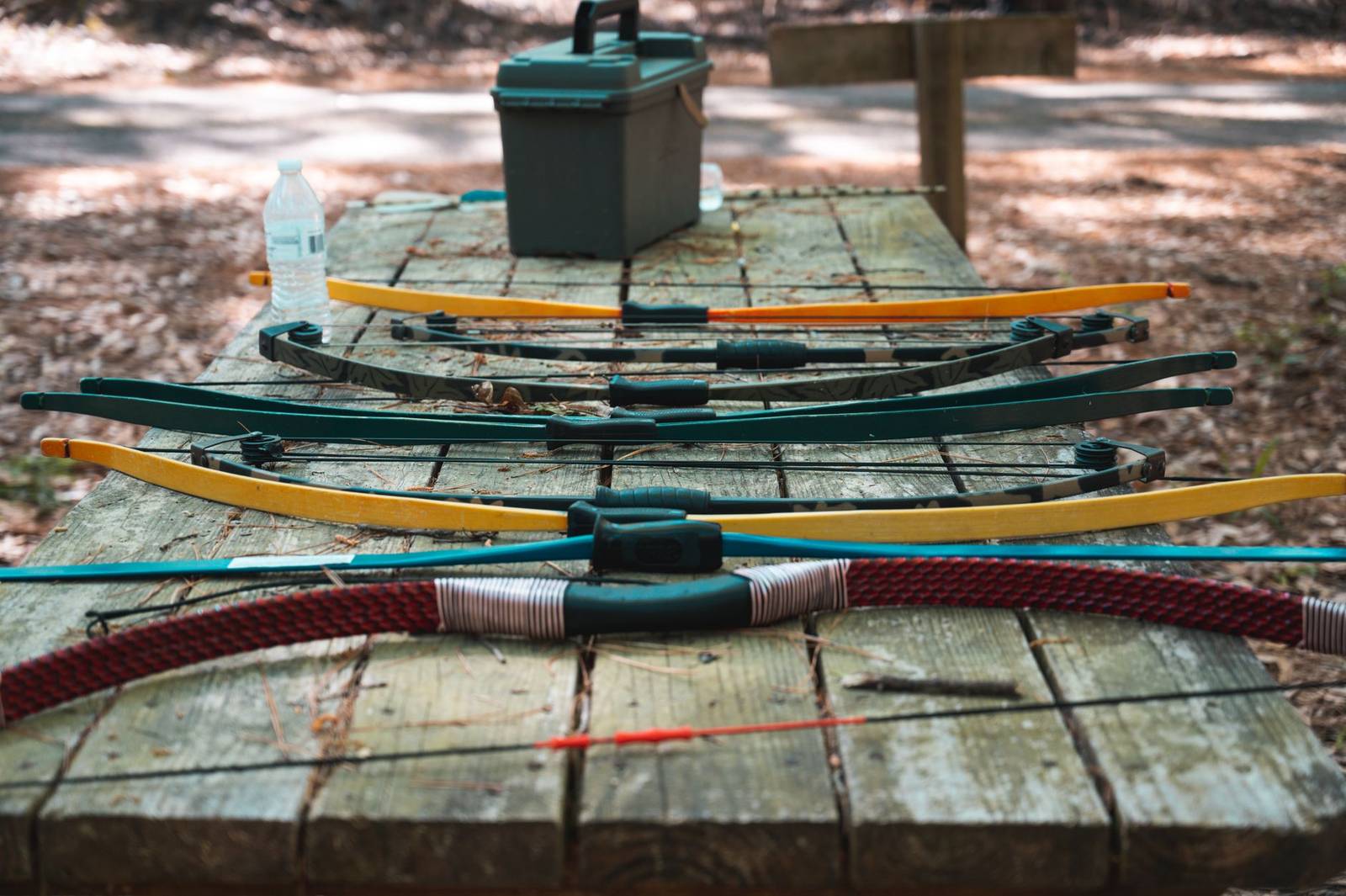
Which archery equipment do competition rules allow?
If you plan to enter events, rules shape your kit. The standard formats differ by bow style, and equipment inspection is the process of checking that an athlete’s equipment falls within the rules, according to the glossary.
The World Archery glossary (2016) lists these ranking rounds:
- Recurve: athletes shoot 72 arrows at 70 metres on a 122cm target face.
- Compound: athletes shoot 72 arrows at 50 metres on an 80cm target face.
- Indoor archery: usually done over 18 metres.
Rules also set limits on gear. In its equipment specifications for its Achievement Program, USA Archery defines a Basic Compound as a bow where the draw is mechanically varied by pulleys or cams, with a maximum draw weight of 20 lbs. That class allows no sight, stabilizer, peep or kisser button, and it is shot with fingers, while an arrow rest is permitted.
The same document covers the Fixed Pins class. A front stabilizer may not exceed 12 inches in total length, measured from the tip to the point of attachment on the front of the riser, and a single rear stabilizer has no length restriction. Check the USA Archery page for the latest wording before you buy.
The glossary also mentions field archery, done outdoors around a course with targets of varying sizes and distances. Whatever format appeals, form matters as much as kit, so move on to archery techniques once your equipment fits.
Frequently asked questions
What is the minimum archery equipment for a beginner?
Show answer
Start Archery lists a bow, a string, some arrows, a bracer, a finger tab, a quiver, a bow stand, a bow stringer and a target as the basics for getting started.
Do I need a release aid?
Show answer
A release aid is for compound archers, according to Start Archery. The World Archery glossary of 2016 says a release aid is not permitted on a recurve, so recurve and barebow archers draw with their fingers.
Why does arrow length matter?
Show answer
Start Archery warns that an arrow that is too short can fall off the arrow rest when you draw it, and it can damage the bow or you. It calls choosing the right arrow stiffness and length vital.
Do barebow and recurve archers use the same finger tab?
Show answer
No. Start Archery says barebow archers have a different type of finger tab from recurve archers, so check which style a tab is made for before you buy.
What is the difference between a bracer and a chestguard?
Show answer
They guard different areas. A bracer, also called an armguard, sits on the inside of your bow arm and stops the string striking it, while a chestguard sits across the chest instead. Both are listed as accessories in the World Archery glossary.