Standing in the woods facing a foam deer, you may wonder how any of it is scored. 3D archery is a course of animal targets at varying distances, scored 0 to 12 points per arrow.
If you want somewhere to try it, read more about archery clubs and the events they run.
| Item | Value |
|---|---|
| Typical course length | Usually 30 targets |
| Usual maximum distance | 50 yards in most competitions |
| IBO ring values | 11, 10, 8 and 5 points |
| ASA top ring | 12 points |
| Arrows per target | One per archer, shot from the stake |
| Group size | You plus three other archers |
Figures come from Archery360’s January 2026 scoring guide and its May 2022 how-to-shoot article. Rules and course formats can change, so check the source before you rely on them.
What is a 3D archery course and how does it work?
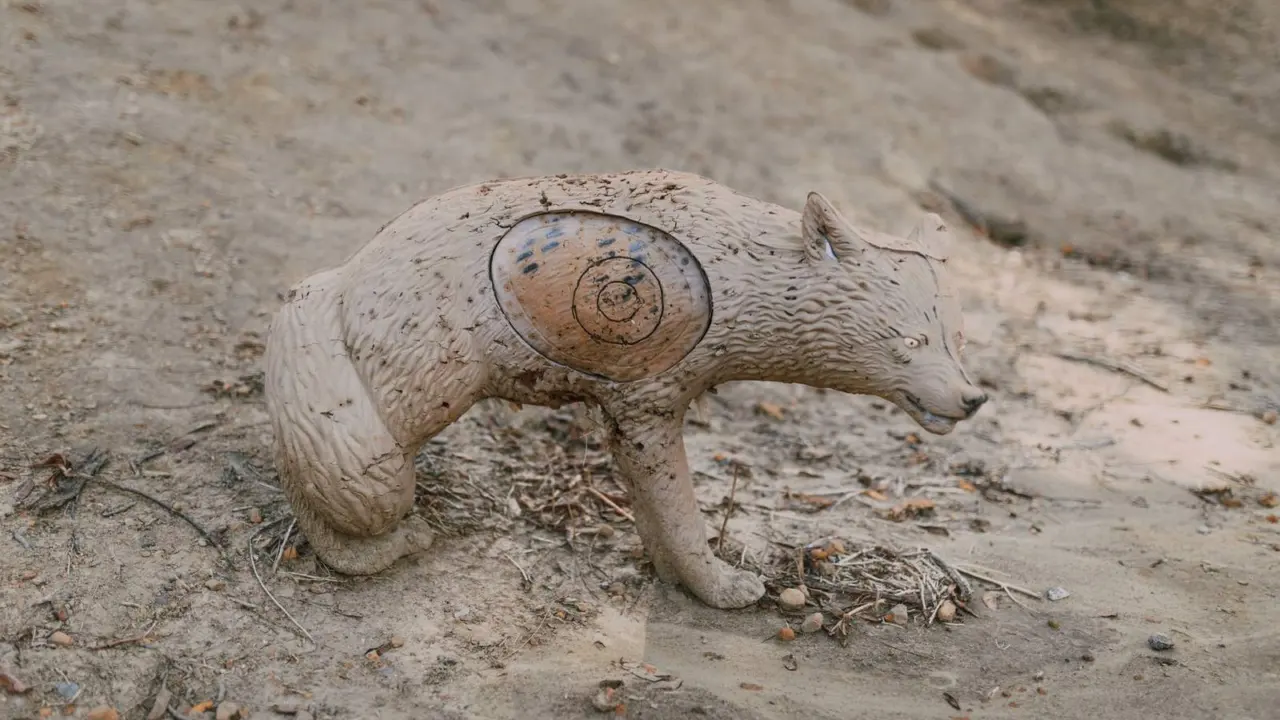
A 3D course is a walking route, usually in the woods, where you shoot at three-dimensional foam animal targets set at varying distances. The discipline gets its name from those targets, which range from small skunks to massive elk and sit along a course connected to hiking trails.
Each station copies a situation a bowhunter might meet. You might shoot downhill at a deer in a brushy thicket, then walk a few steps to shoot at an alligator in a swamp.
The ground matters as much as the animal. Like the related sport of field archery, 3D archery takes place on outdoor trails, typically in wooded and rugged terrain.
A full course usually has 30 targets. Animals you may meet include white-tailed deer, bears, bobcats, coyotes, Dall sheep, elk, leopards and alligators.
How 3D archery scoring works
The two largest 3D organizations are the International Bowhunting Organization (IBO) and the Archery Shooters Association (ASA). Each has its own rules and targets, and in both a miss scores 0 points.
IBO scoring
IBO targets have rings of different sizes, like a typical target. The values run from the centre outwards:
- The smallest centre circle is worth 11 points.
- The next ring is worth 10 points.
- The biggest scoring ring is worth 8 points.
- A hit anywhere else on the target outside the 8 ring scores 5 points.
ASA scoring
ASA targets share the same 5, 8 and 10 rings, but add a bulls-eye within a bulls-eye for a maximum of 12 points. There are two 12 rings inside the 10 ring, one on the upper edge and the other on the bottom edge.
The bottom 12 ring is the default. You can aim at the upper 12 instead if you call it before shooting and tell your group.
ASA targets also have a 14 ring in the upper corner of the 8 ring. It is not always in play, so ask the shoot’s organizer, and call it before you shoot to earn the extra points.
In both systems the arrow only needs to touch a ring to earn that ring’s points. An arrow almost entirely in the 8 ring but touching the outer edge of the 10 ring scores a 10.
Finding the rings is part of the challenge. They sit roughly where the vital organs would be on the real animal, but they are only etched into the foam rather than picked out in bright colour, so lighting can make them hard to see. Other disciplines count points differently, which the guide to archery scoring covers.
Known and unknown distances
For the most part, the longest shot in a 3D competition is 50 yards. Divisions for kids, novices, barebow archers and Olympic recurve archers cap the distance at 30, 40 or 45 yards, and a few extreme-distance shoots go out to 100 yards.
Whether you know the distance depends on the format:
- Known: rangefinders are allowed to measure the distance to the target.
- Unknown: you judge the distance yourself, which adds challenge.
The ASA has divisions where distances are both known and unknown, while the IBO offers only unknown-distance shooting. In known-distance shooting, a rangefinder that handles uphill and downhill angles will calculate cuts, which are yardage reductions for shooting at an angle.
In unknown classes, judging distance is a skill you train. One approach is to carry a rangefinder, guess the distance to things you pass, then check your guess.
Divisions and equipment
Major international 3D events are run under the rules of the World Archery Federation (WA) or the International Field Archery Association (IFAA). In WA competition regulations, there are four divisions authorized for 3D shooting:
- Traditional bow
- Longbow
- Barebow
- Compound bow
In all four WA divisions the arrow shaft may not exceed 9.3 mm in diameter. In the US, ASA and IBO both allow arrows up to 27/64 inch, and fatter arrows raise the chance of clipping a scoring ring.
Arrow speed limits vary by division, so check your class rules and use a chronograph. Courses are wooded and often dark, so choose a peep size and scope magnification that let you see the rings.
Weather rarely stops play. Typically the only weather element that postpones a 3D tournament is lightning.
Local rules differ. Archery Canada’s 3D rulebook, Version 2 dated April 28, 2026, requires all competing archers in a registered event to sign a liability waiver and says registrants may not enter multiple categories within one registered event. Check the rules of the organization and your class before you set up your bow.
A 3D shoot day, from registration to the last target
A typical day follows a set order:
- Go to the registration area, pay your entry fee and sign the forms.
- Visit the practice range to warm up and check your sights.
- Join your group. You shoot the course with three other archers.
- Set the shooting order, usually by shuffling scorecards face down and drawing them one at a time.
- Shoot one arrow from the stake at each target, then walk up, score and pull your arrows.
Within the group, two archers keep score, one calls out the scores and one pulls the arrows. The order rotates after each target. This keeps things fair, because shooting last lets you use the other arrows in the target to help you aim.
Stakes or small flags in different colours mark the shooting positions at each target. Most courses place them at various distances to suit different equipment and age classes, and you learn which one to use when you register.
At the top of the sport, the first World Archery 3D Championships took place in 2003. The 2024 edition in Mokrice Castle, Slovenia had more than 305 archers from 31 nations in six days of competition.
Frequently asked questions
How many points is a bulls-eye in 3D archery?
Show answer
It depends on the organization. The smallest centre ring on an IBO target is worth 11 points, while ASA targets have two 12 rings.
Do I need a rangefinder?
Show answer
Only in known-distance classes, where rangefinders are allowed to measure the distance to the target. In unknown classes you judge the distance yourself.
How many targets are on a 3D course?
Show answer
A course usually has 30 targets, according to Archery360’s January 2026 scoring guide. Individual shoots may differ.
Does an arrow touching the line count for the higher ring?
Show answer
Yes, in ASA and IBO scoring the arrow only needs to touch a scoring ring to earn that ring’s points.