Nervous about picking up a bow for the first time? Archery for beginners starts with a class, a light rental bow and a few safety rules. Learn those, and you can shoot with confidence.
If you are weighing where to learn, our overview of archery clubs shows the wider picture.
| Item | Value |
|---|---|
| Typical beginner bow draw weight | About 15 to 20 pounds |
| Time to pick up the basics | A few hours |
| Ways to learn archery | 3 (classes, coaching, self-taught) |
| Steps in a simple getting-started process | 5 steps |
| Shooting styles beginners choose from | 3 (traditional, recurve, compound) |
These figures come from Matador Network’s beginner guide, dated May 19, 2020, and ImproveYourArchery.com’s getting-started page. They can change, so check the source before you rely on them.
What happens at your first session
Most beginners start by booking an introductory class at a range, as Matador Network’s guide describes. These classes are usually also required before you can register for membership at a range.
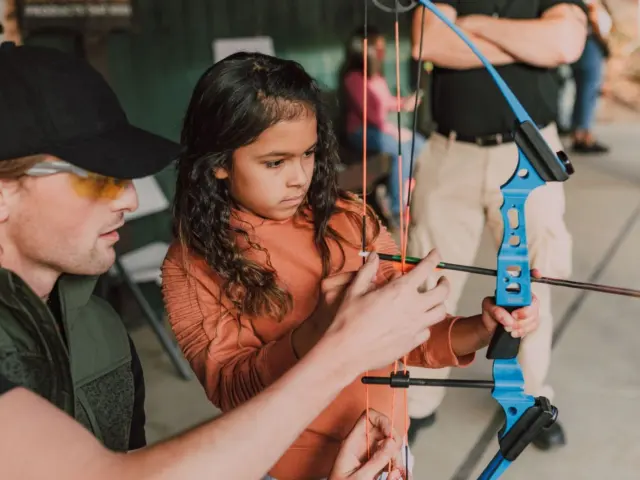
At the class, a coach shows you around and sets you up with rental equipment. That lets you try the sport before you spend anything on a bow of your own.
A staffed range tends to follow a predictable routine, according to the walton.uark.edu beginner guide. Expect this:
- Measuring: staff check your arm length to find your draw length, which the guide calls crucial to selecting the proper bow.
- Arrows: you get arrows of the proper size and length for that bow.
- Safety brief: every range has different rules, so pay attention.
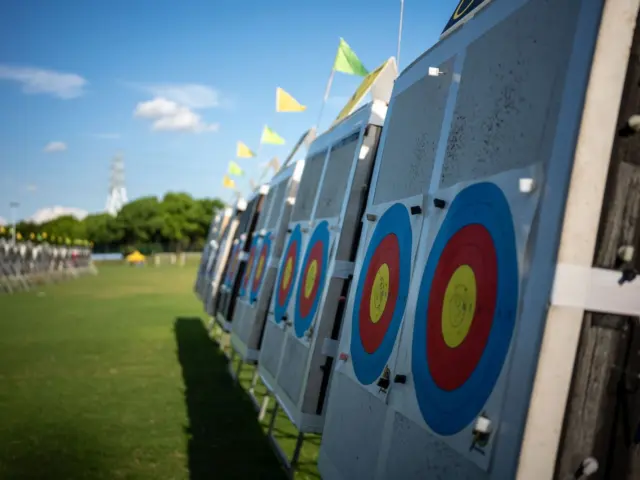
- Target briefing: at a manned range you hear about the targets and their distances.
Our guide to archery range safety rules covers the common themes, but the posted rules at your own range always come first. If a range has no staff, look for a sign or check the range’s website for its rules.
The Matador guide also lists common “don’ts” that you will hear on the firing line:
- Don’t shoot with damaged equipment.
- Don’t dry fire your bow, which means firing without a nocked arrow.
- Don’t aim at anyone.
- Don’t leave the firing line while shooting.
- Don’t walk onto the range to retrieve arrows until the all-clear is given.
Which bow should a beginner start with?
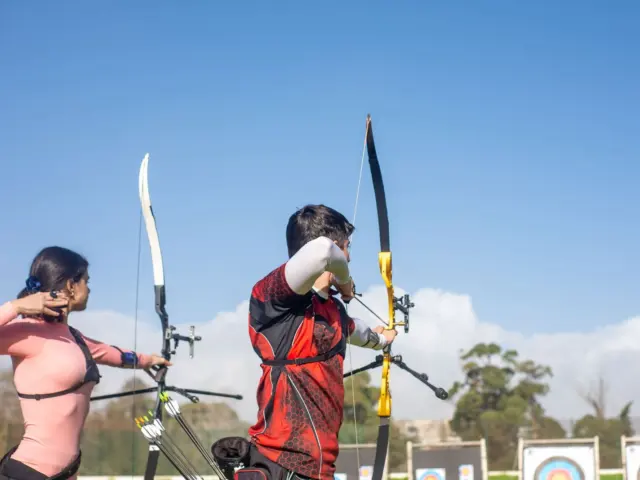
The Walton guide sorts bows into two main categories: compound bows and recurve bows. Both suit beginners, but they feel quite different in your hands.
A recurve bow is a relatively simple design. Because it has fewer complex moving parts, the guide says it is cheaper to buy and more accessible for many beginners, and recurves are available for rent or use at almost every archery range.
A compound bow uses strings, pulleys and mechanical devices, so it can look intimidating. The same guide notes that most models are highly adjustable, so you can grow with the bow in height and strength without buying a new one.
ImproveYourArchery.com adds a wider view of three shooting styles: traditional, recurve and compound. It also says most archery classes focus on recurve archery, where you learn to shoot a beginner’s bow with and without a sight.
Choose how you want to learn before you buy anything. A class or club will usually point you toward the right bow type, and renting first keeps your options open.
Gear you will meet on day one
You do not need to own equipment for a first lesson. Here is what a coach will typically hand you, based on the Matador guide:
- A bow matched to your eye dominance and height, with a low draw weight of about 15 to 20 pounds.
- An arm guard, a stiff plate that protects your bow arm if the string hits you because of incorrect form.
- A finger pad, a sheet of tough fabric that protects your drawing hand from blistering.
- A quiver and arrows for carrying and shooting.
The same guide explains that a lower draw weight makes arrows fly slower and shorter, but it is better for practicing proper form. Whenever you handle a bow, look for damage to the string or the body.
Arrows have two parts worth knowing. The notch at the back is the nock, and the fins are the fletching, which stabilizes the arrow in flight.
The Walton guide says a standard arrow has 3 fletchings, with one in a different color. When you nock the arrow, that off-color fletching points toward the top of the bow.
The basic shot, step by step
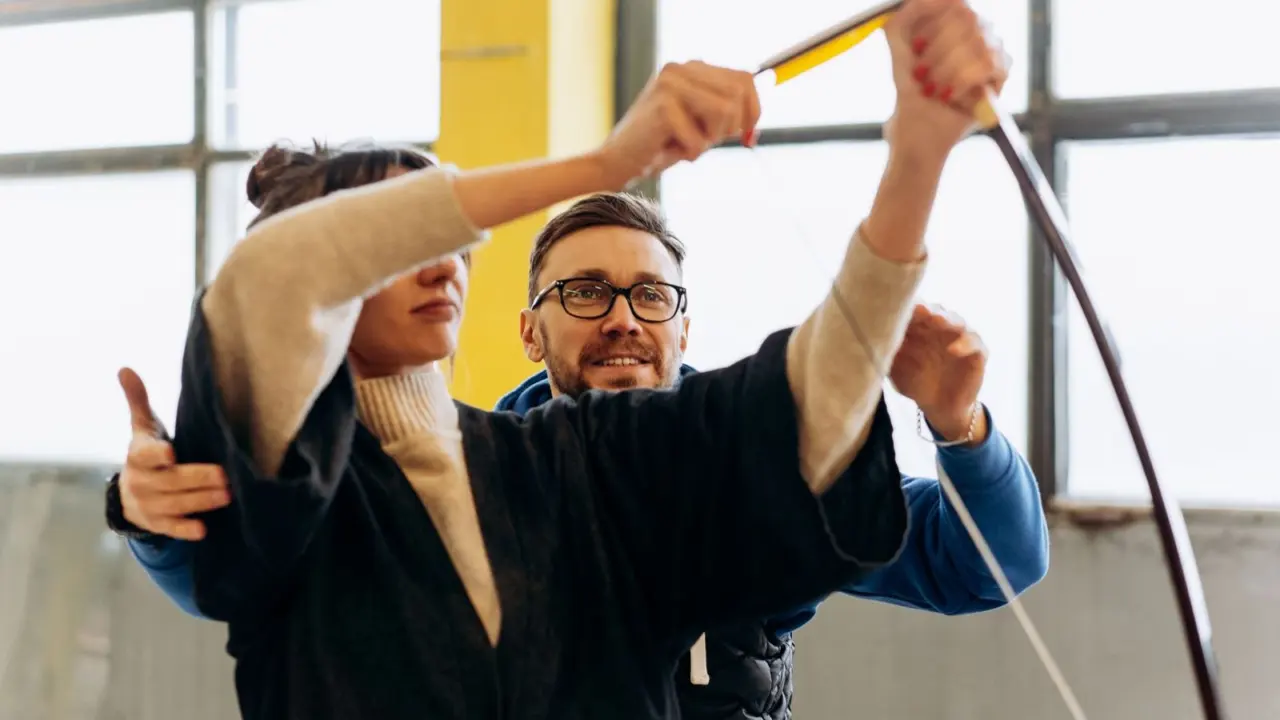
The steps below blend the Walton and Matador guides. Treat them as a preview, because your coach’s instructions override anything you read.
- Stance: stand perpendicular to the target with your feet about shoulder-width apart. If you are right-hand dominant, your left foot is closest to the target.
- Hold the bow: a right-handed archer holds the bow with the left hand and draws with the right. Left-handers reverse this.
- Nock: when it is safe, aim the bow at the ground, place the nock on the string and rest the shaft on the arrow rest or ledge.
- Draw: on a recurve you draw with your fingers, while on a compound you use a mechanical release. Matador advises pulling by turning your waist and using your back muscles instead of relying on your arms.
- Anchor: rest the string hand against your jawline, ear or chin.
- Aim: a compound bow usually has a sight with pins, while a recurve with no sights relies on what the Walton guide calls instinctive shooting.
- Release: let go by pulling back your draw hand, like you’re strumming a guitar.
The anchor point matters because it lets you shoot from the same draw length and power each time. That repeatability gives better accuracy and makes form easier to practice.
Matador also names the box stance as the most basic stance for beginners. Its second big lesson is consistency: a good archer practices shooting an arrow the same way, every time.
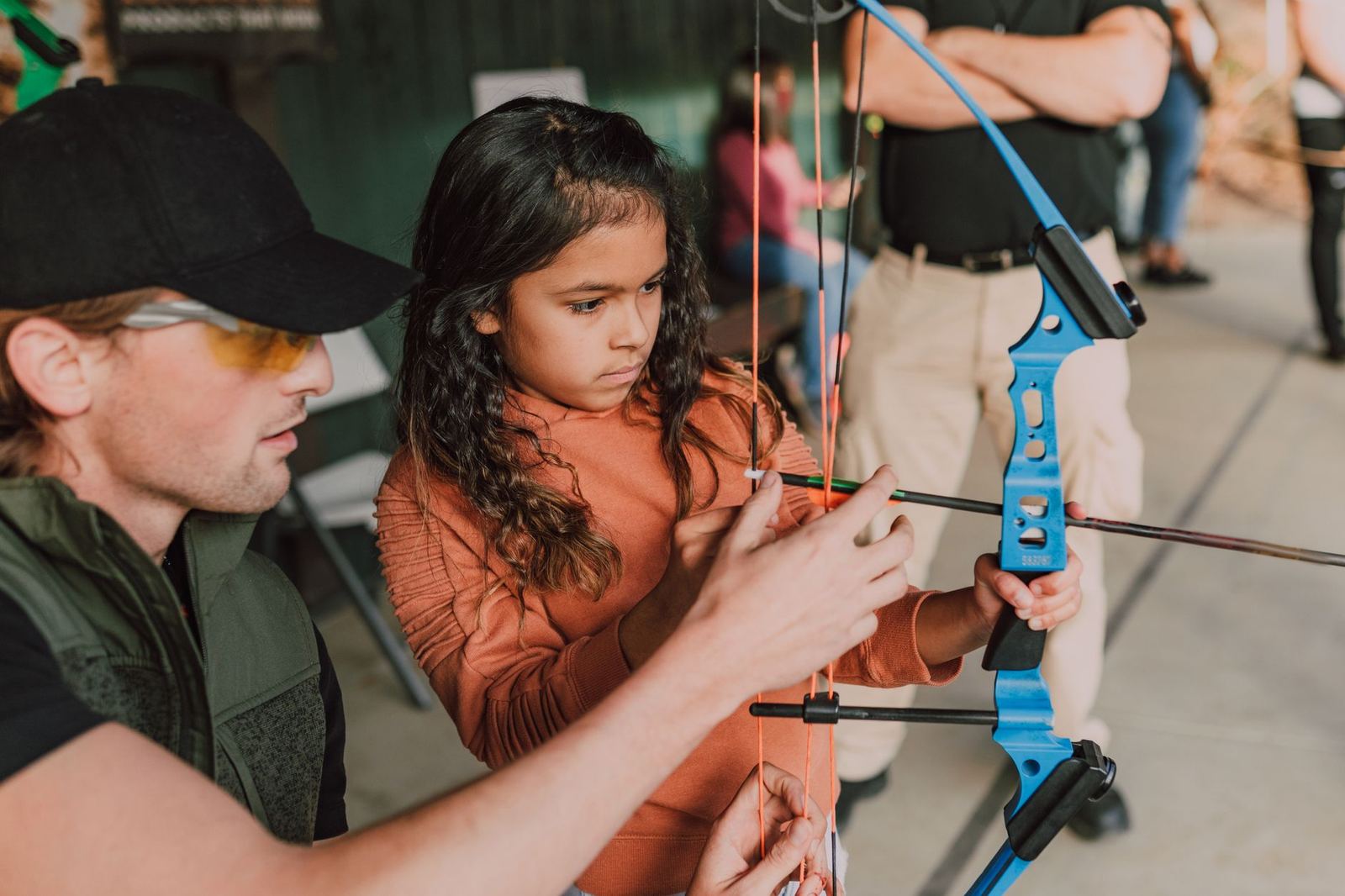
Do not worry if your first arrow misses. As Matador puts it, your very first shot might land on target, and it might not, and the next step is simply to do it all again.
Where can you practice?
You have more options than a formal club. A USA Archery guest post from June 10, 2024 lists public archery ranges, indoor ranges and archery clubs as great places to shoot. It also calls an indoor range a climate-controlled oasis when winter hits.
Staffing varies a lot from range to range. The Walton guide describes unmanned outdoor ranges as having targets set up and no staff, so there are no rentals or coaching.
A staffed range suits a true beginner better. As a neutral example, that guide says The Quiver Archery Range in Bentonville charges an entrance fee that includes a bow rental for the hour you are there, plus sizing for the right bow.
When you want regular sessions, this guide to how to join an archery club covers the next step. Whichever venue you pick, the Walton guide advises sticking to closer ranges at first while you learn your bow.
Costs and realistic expectations
Archery can fit most budgets. The USA Archery post suggests group lessons instead of private ones, plus free places to shoot such as public ranges or your own backyard.
ImproveYourArchery.com notes that club membership fees tend to be lower than for most other sports. It also says most archers buy quite expensive gear, but you do not need that to shoot well.
Set your expectations on the physical side too. The same page says archery builds upper body muscles but is not a cardio sport, so do not count on it for weight loss.
Finally, there are three ways to learn: classes, coaching or teaching yourself. Most people mix them, starting with a class and adding peer feedback or a coach later.
Frequently asked questions
Do I need to buy a bow before my first lesson?
Show answer
No. The Matador guide says a coach sets you up with rental equipment at an introductory class, and the Walton guide says recurve bows are available for rent or use at almost every archery range.
How long does it take to learn the basics?
Show answer
Matador says the basics can be picked up in a few hours and refined for years. Expect to keep working on consistent form long after your first class.
Is a recurve or a compound bow better for beginners?
Show answer
Both are popular. Recurves are simpler and cheaper, while compounds are highly adjustable, so try each at a range before you decide.
Can I teach myself archery?
Show answer
Yes, but it takes more research. ImproveYourArchery.com says self-teaching means gathering information from books, videos, forums and articles, and that peer feedback can be very helpful.